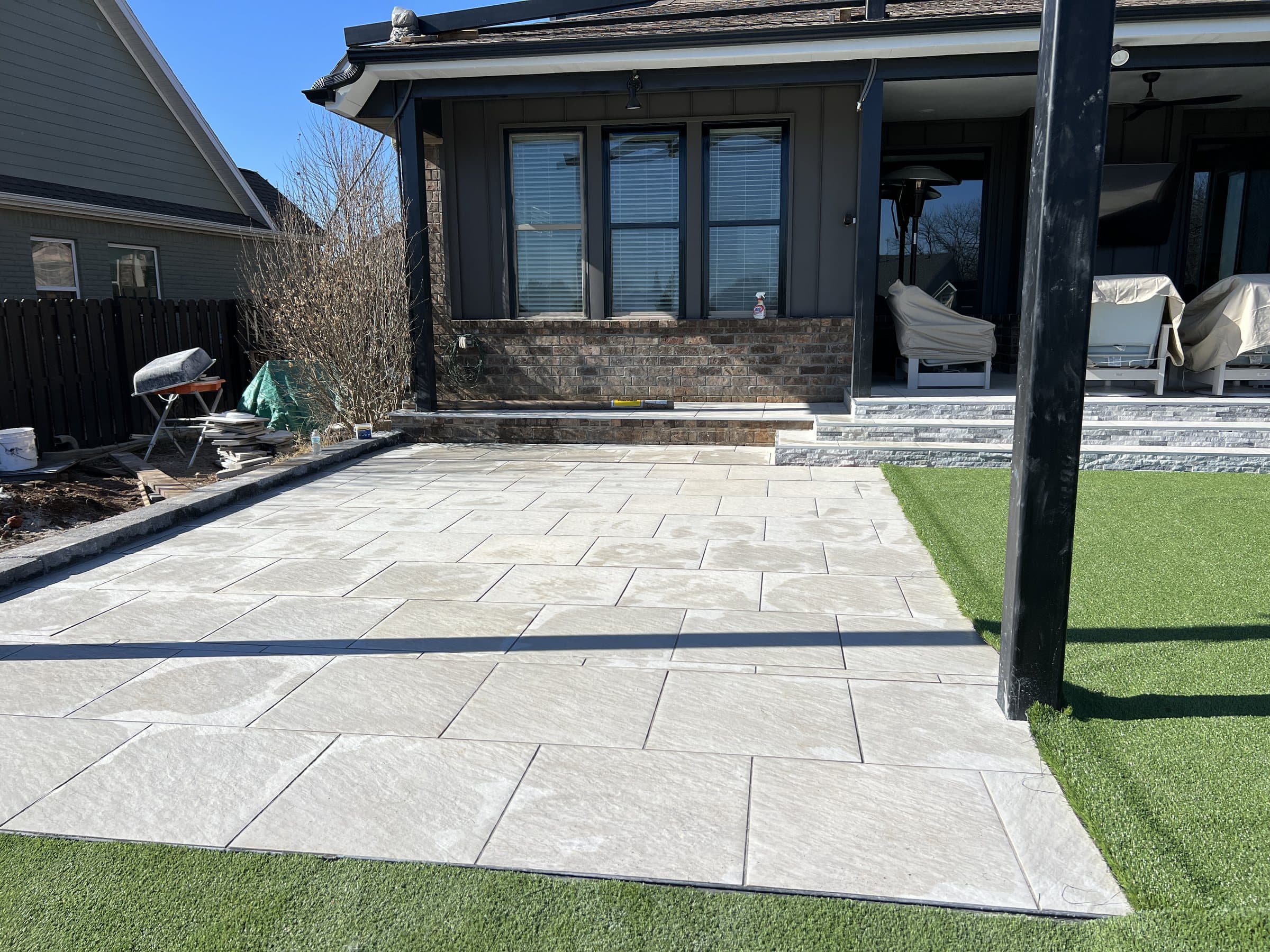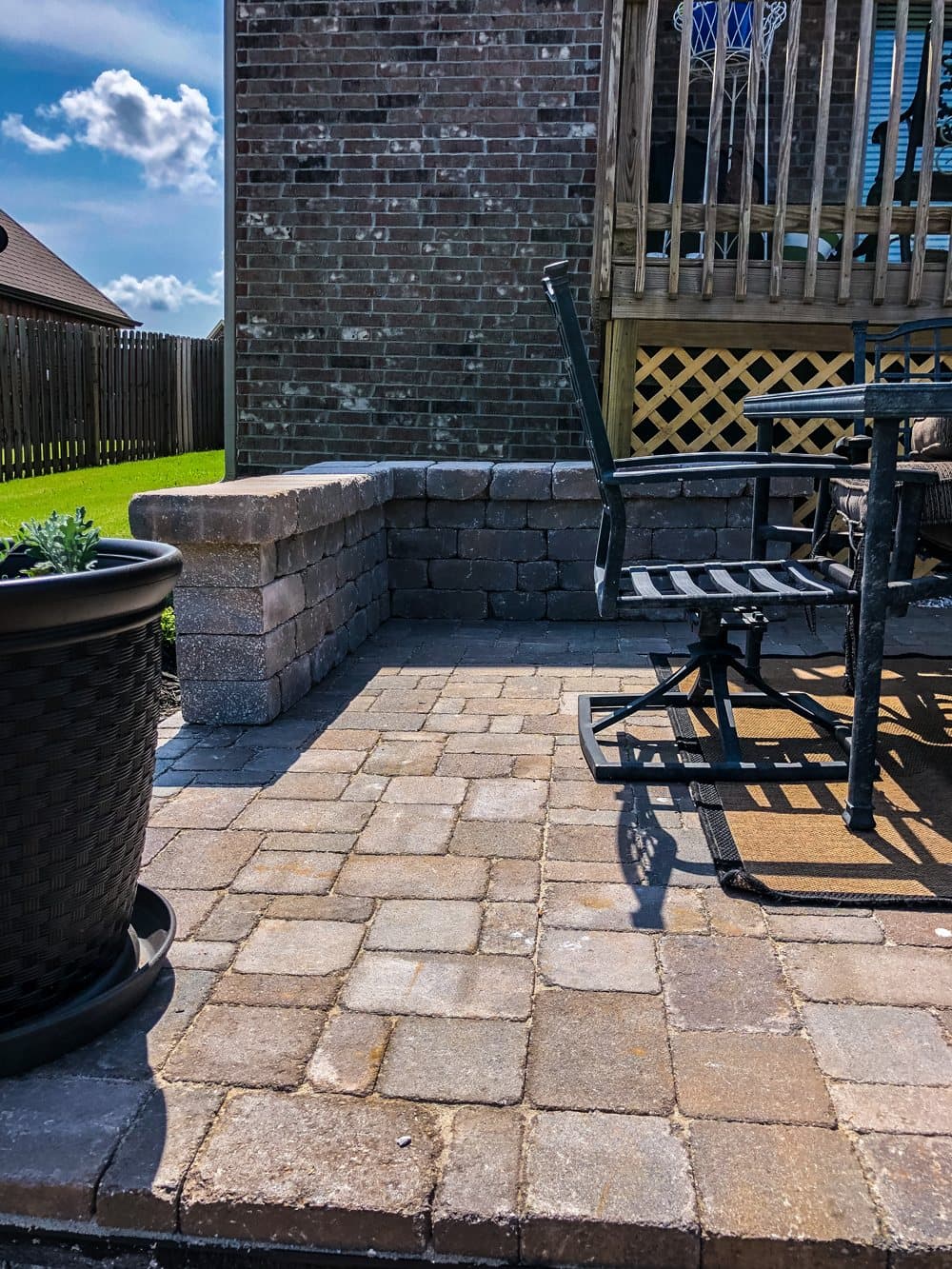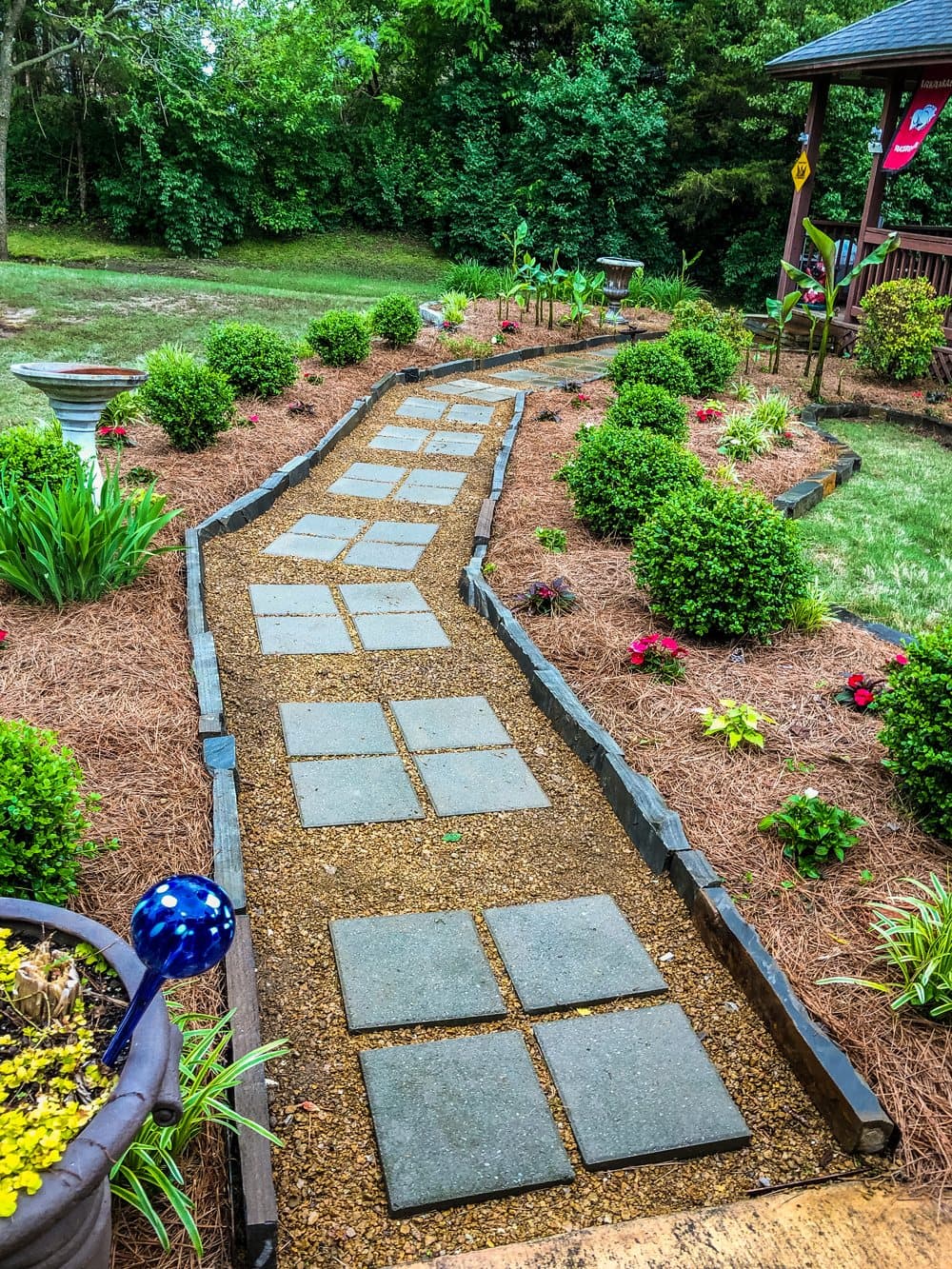

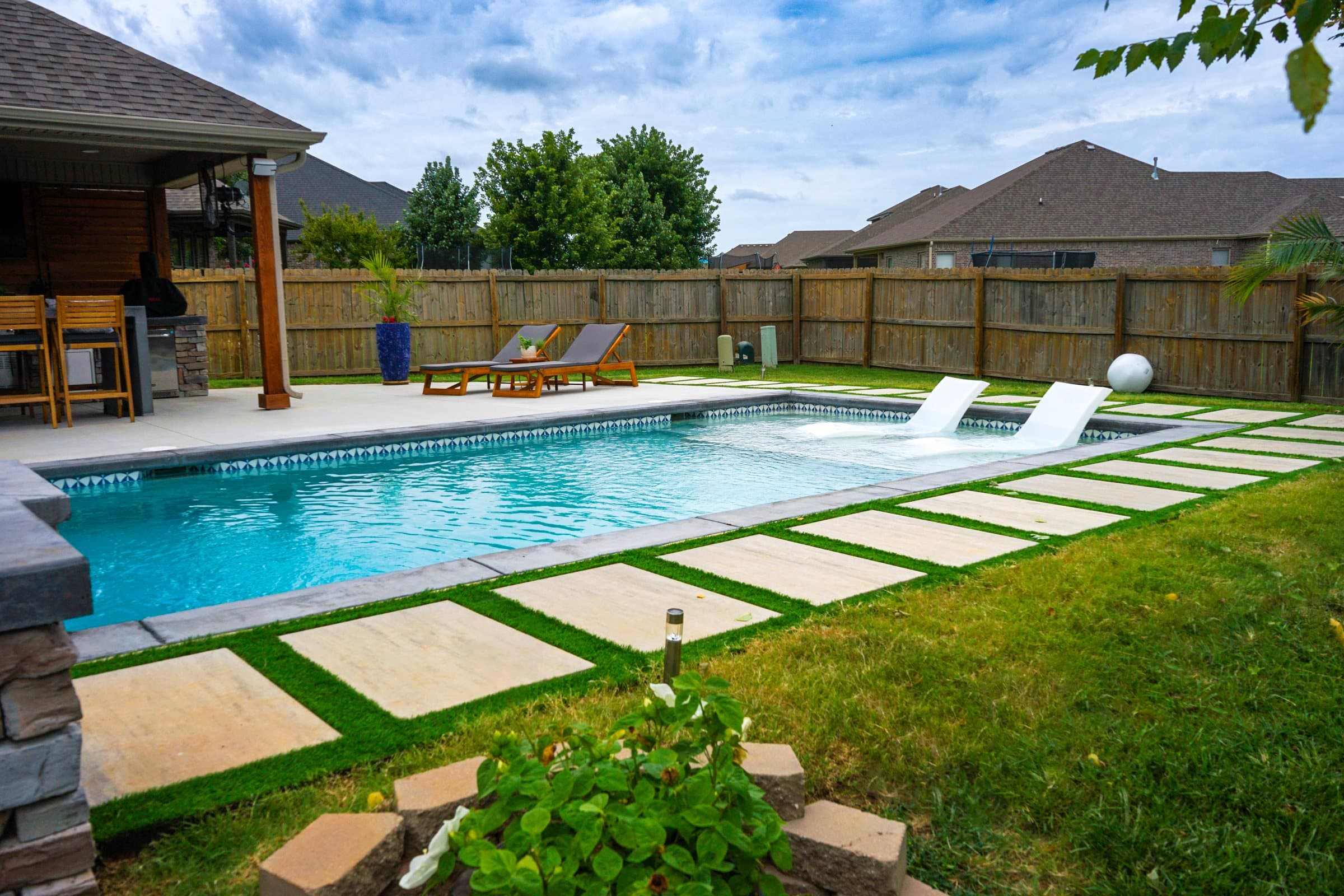
Cave Springs issues its own permits from the Building Department at City Hall, 134 N. Main Street, on 479-248-1040. Pools need their own permit with a site plan, a marked-out pre-site visit and bonding inspections, plus a refundable $1,000 deposit if no barrier fence exists yet. Structures and additions go on a residential or miscellaneous permit, and a grading permit is tied to subdivisions, large developments or more than an acre of disturbance.
01Does a patio need a permit in Cave Springs?
A plain patio at grade is not one of the permit types the city publishes. The Building Department's applications are a residential building permit, a miscellaneous permit, a pool permit, a subcontractor permit and a demolition permit, with grading, site plan review, variance and similar applications handled through Planning and Development.
The miscellaneous permit covers additions, remodels and garages, solar, storm shelters and an open "other" category, and its fee sheet includes a slab line with an inspection required. If your project includes a roof, a structure tied to the house, a poured slab, or gas and power to an outdoor kitchen, call the Building Department and describe it. It is a small office and a short conversation.
Cave Springs is our own town, so this is ground we know. The honest summary is that the paperwork here is lighter than in Fayetteville, and the ground is the part that deserves respect.
02What does a pool permit involve in Cave Springs?
More steps than any other residential permit the city issues, and they are sensible ones. The pool permit application asks for a site plan showing the pool, easements, barriers and septic fields with lateral lines marked.
Before the permit is released there is a pre-site visit, and for it the pool layout must be marked on the ground, utility locates and septic locates marked, and the barrier shown. If there is no fence already, the city collects a $1,000 deposit, refunded once the barrier is complete.
| Pool permit step | What the city requires |
|---|---|
| Application | Site plan with pool, easements, barriers, septic fields and laterals |
| Pre-site visit | Layout, utility locates and septic locates marked; barrier shown |
| Barrier deposit | $1,000 if no fence exists, refundable when the barrier is done |
| Electrical | Pool, deck and equipment bonding to NEC 2017; inspected |
| Gas | Gas pressure and yard line to the Arkansas plumbing code; inspected |
| Subcontractors | Separate permits for electrician, plumber and HVAC, with licence and insurance |
| Final | Pool 100% complete and filled with water |
Inspections are scheduled 24 hours in advance, and a failed inspection carries a re-inspection fee before it can be rebooked. A pool permit, like the residential permit, becomes void if work does not start within six months, runs past a year, or stops for six months.
Deck bonding is the line people skip past. The concrete or pavers around a pool are part of the electrical safety system, which is why the pool deck and the pool should be designed together, not by two trades who never talk.
03Do I need a grading permit in Cave Springs?
Not for a typical back garden. The city's Drainage Criteria Manual says a grading permit is required for projects that involve a large scale development plan or a preliminary plat, before earthwork starts or before more than one acre is disturbed. It is issued only after that plan or plat is approved.
If a project is big enough to be heading that way, the Grading Permit Application is published on the city's Planning and Development page. For everything else, the question is not the permit, it is where the water goes.
04What is the Cave Springs Recharge Area?
It is the karst catchment that feeds the cave the town is named after, and it is unusual. The city's Drainage Criteria Manual describes Cave Springs cave as holding the largest known population of the Ozark cavefish, a federally listed threatened species, and treats water quality in the cave as an indicator for the shallow aquifer across the region.
The manual puts the whole recharge area at 12,515 acres across Cave Springs, Rogers, Lowell and Springdale, with a Direct Recharge Area of 5,702 acres where soils allow rapid recharge and runoff has a direct route into the karst. Within the Direct Recharge Area, the city's Karst Resource Conservation Regulations add requirements for stream buffers, runoff reduction, filtration and construction practices.
For most homeowners those regulations do not bite. The manual exempts a single-family home on a lot subdivided and developed before the regulations took effect, and residential development on an existing lot that disturbs less than an acre and is not part of a larger common development. A patio or pool on an established lot generally falls inside those exemptions.
The reason behind them still applies. On karst, rainwater and fine sediment do not just run off, they can go down. Silt control during the build, a proper concrete washout rather than rinsing into the lawn, and sending roof and patio water to a designed outlet are simply how building here should be done.
05Why the ground matters more than the paperwork here
Cave Springs sits on the Springfield Plateau, on the Boone Formation: limestone interbedded with chert, dissolved in places into caves, springs and voids, and weathered at the surface into red clay packed with chert fragments. Shallow rock is common.
Two practical consequences. Excavation is the part of a quote most likely to change, because a footing or a pool dig can meet rock well above where a plan assumed it would. And water management is not a finishing detail. A downspout discharging onto a patio edge over this clay will find the weak point in the base within a few winters.
If you notice a depression, a hole or a spot that keeps settling on a Cave Springs lot, read our guide to sinkholes and hollow spots before you fill it.
06A worked example: pool, deck and kitchen in Cave Springs
A pool with a paver deck, a covered outdoor kitchen with gas and power, and a low stone wall where the garden steps down. Inside the city limits, this is how it runs.
Pool: a pool permit, with the site plan, the pre-site visit, the barrier question settled early and the bonding inspections through construction. The deck is bonded as part of the pool, so it is inspected too.
Covered kitchen: a conversation with the Building Department about which permit the structure goes on, plus separate subcontractor permits for the electrician and the plumber doing the gas. Each subcontractor permit needs the trade's licence and insurance.
Low wall and patio: not a published permit type. They still sit on karst clay, so the base and the drainage are designed for it.
Water: the pool, deck, roof and patio together make a lot of hard surface. Where that water goes should be on the plan before the permit application is, because on this ground it matters.
07Who signs, and who books the inspections?
The city's applications are built around a licensed contractor. The pool application asks for the contractor's state licence number and expiry, a copy of the licence and a certificate of liability insurance, and separate permits for each subcontractor. Both the residential and pool applications have a signature line for the owner only where the owner is the builder.
Inspections are booked 24 hours ahead, and a failed inspection has to be paid for before it can be rebooked. That is a small cost and a bigger delay, which is why the work should be ready when the inspector arrives rather than nearly ready.
On our projects, we pull the permits and book the inspections. For a pool, that includes the pre-site visit, which means marking the layout and getting utility and septic locates done beforehand.
08Why the pool and the patio should be one design
In Cave Springs the paperwork treats the pool as its own permit, but the pool, the deck around it, the barrier, the drainage and any covered area are one system. The deck is bonded with the pool. The barrier has to be in place, or a deposit held, before the permit is released. The water off all that hard surface has to go somewhere on karst ground.
When a pool company, a paver crew and a fence installer each do their own part, nobody owns the joins. That is where the problems show up: a deck that drains toward the house, a barrier that fails the final, a base that settles where the pool excavation was backfilled. Turnkey, one team start to finish, is what avoids it.
09What to have ready before you apply
- The parcel number and a 911 address. The city's residential application points to Benton County's 911 Administration on 479-271-1085 for addresses and the Assessor on 479-271-1037 for parcel numbers.
- A site plan with setbacks, easements, and septic fields if you are on septic.
- For a pool, the barrier plan and whether a fence already exists.
- Your contractor's state licence and certificate of liability insurance, which the pool application asks to be submitted with it.
- Your subcontractors' names, licences and insurance.
10What about property outside the city limits?
Much of the area around Cave Springs is unincorporated Benton County, where Benton County Building Safety is the authority. Since 28 November 2023 the county has not required building permits for Residential Group U structures in unincorporated areas: detached shops with no living space, carports, storage buildings, decks and fences.
The county still requires permits for structures attached to a house, for pools, and for new plumbing, electrical or HVAC work, and pool fencing must meet section 305 of the 2021 International Swimming Pool and Spa Code. The county also asks for a site plan review through its Planning Office on 479-464-6166 even where no building permit applies. Building Safety is on 479-271-1003.
11Rules change: confirm with City Hall
This page reflects the City of Cave Springs' published applications and Drainage Criteria Manual when checked in September 2026. The city has moved to new online permit software, and forms and fees change. Confirm with the Building Department, 134 N. Main Street, Cave Springs, on 479-248-1040 (follow the prompts) before relying on it. A finished pool build in Cave Springs is in our portfolio as the Swindle build.
FAQCommon questions
Do I need a permit for a patio in Cave Springs?
A plain patio at grade is not one of the city's published permit types. Roofs, structures, slabs and gas or power work may be. Call the Building Department on 479-248-1040.
How do I get a pool permit in Cave Springs?
Apply with a site plan showing the pool, easements, barriers and septic fields, then pass a pre-site visit with the layout and locates marked before the permit is released.
Why does Cave Springs want a $1,000 deposit for a pool?
If there is no barrier fence before the pool permit is released, the city holds a $1,000 deposit and refunds it when the barrier is complete.
What inspections does a Cave Springs pool need?
Pre-site, pool bonding, deck bonding, equipment bonding, gas and electric, and a final with the pool complete and full of water.
Do I need a grading permit in Cave Springs?
Only for projects involving a large scale development plan or preliminary plat, or more than an acre of disturbance, according to the city's Drainage Criteria Manual.
Do the cavefish rules affect my backyard project?
Usually not. The karst regulations exempt homes on existing lots and projects on existing lots that disturb less than an acre. Good drainage and silt control still matter.
What if my house is outside Cave Springs city limits?
Benton County applies. Detached decks and fences need no county building permit; pools and attached structures do, and the county still reviews your site plan.
REFSources
- City of Cave Springs: Building Departmentcavespringsar.gov
- City of Cave Springs: Pool Permit Applicationaptg.co
- City of Cave Springs: Drainage Criteria Manualaptg.co
- Benton County Building Safetybentoncountyar.gov
NEXTGet it looked at properly
Everything above is general guidance. What your ground actually needs is a site visit, and ours costs nothing. Francisco Gallardo walks it, reads the grade and the drainage, and tells you what is possible.