
Most backyard mosquitoes in Arkansas breed in small pockets of standing water close to the house, so the design job is to leave nowhere for water to sit: patios that fall and drain, gutters and pipes that empty, planters without saucers and water features that keep moving. The University of Arkansas Extension Service calls removing breeding sites the only real solution. For the humidity, orient seating to catch air, put fans under covers, and consider a screened room.
01Where do backyard mosquitoes actually come from?
Mostly from small, forgotten water close to the house.
The University of Arkansas Extension Service points out that mosquitoes can breed in almost any water that stands long enough, and that around the home, birdbaths, pet bowls, plant pots, tarps, tyres and blocked gutters are the usual sources. The Asian tiger mosquito, which breeds in exactly these small containers, bites during the day as well as at dusk, and a University of Arkansas entomologist has noted its short flight range, a quarter to half a mile. In other words, many of the mosquitoes biting you on the patio were raised within a few gardens of it.
The Extension Service also says larvae turn to pupae about seven to ten days after the eggs hatch. Water that stands for a week or more is a nursery. That is the design target: nothing on the patio that holds water for days.
02Which parts of a patio hold water?
More than people expect, and most are fixed in the design.
| Where water sits | Why | Design fix |
|---|---|---|
| Low spots in paving | Base settled or patio built flat | Build falls into the base; see our patio slope guide |
| Gutters on pergolas and covers | Leaves and flat runs | Proper fall, guards, access to clean |
| Downspout extensions and corrugated pipe | Sags and ribs hold water | Smooth wall pipe to a real outlet |
| Channel drains and catch basins | Sumps that never empty | Self-draining outlets; clean them |
| Planter saucers and pots | Water sits after rain or watering | Drain holes to gravel, no saucers |
| Birdbaths and still water features | Standing, still water | Moving water with a pump; flush birdbaths often |
| Pool and spa covers | Water pools on the cover | Pump it off; keep the pool maintained |
The Extension Service recommends flushing birdbaths at least every five days, keeping gutters free of debris, and correcting drainage problems so rainwater does not pool. The CDC gives similar advice: once a week, empty, scrub, turn over, cover or throw out anything that holds water.
03Does the patio's drainage design matter for mosquitoes?
Yes. A patio that sheds water fast is also a patio with nothing to breed in.
A patio with the right fall, a base that does not settle into dips, and a clear route for water off the surface leaves no puddles a day after rain. A patio built flat, or on a base that sank in its first winter, holds shallow water in every low spot. On the red clay of Benton County, which holds water rather than draining it, and on the shale further south, the drainage under and beyond the patio has to be designed, not assumed. Our drainage and grading guide covers it.
The same goes for where the water ends up. A drain that discharges into a low corner of the lawn creates a wet area that stays wet. Send it somewhere it can soak away or leave the site properly.
04Are water features a mosquito problem?
Not if the water keeps moving and is maintained.
A still pond or a basin that fills with rain is a breeding site. A fountain or a spillway with a circulating pump keeps water moving and clean rather than stagnant, and every breeding site on the Extension Service's list is still water. The Extension Service notes that ponds kept free of weeds, algae and floating debris, and stocked with fish, are not usually major breeding sites. Properly maintained swimming pools with the right chemistry do not breed mosquitoes; neglected ones do.
Design water features so they drain completely when switched off for winter, rather than leaving a basin of standing rainwater.
05How do you design for the humidity?
Catch the breeze, keep air moving under roofs, and use materials that dry.
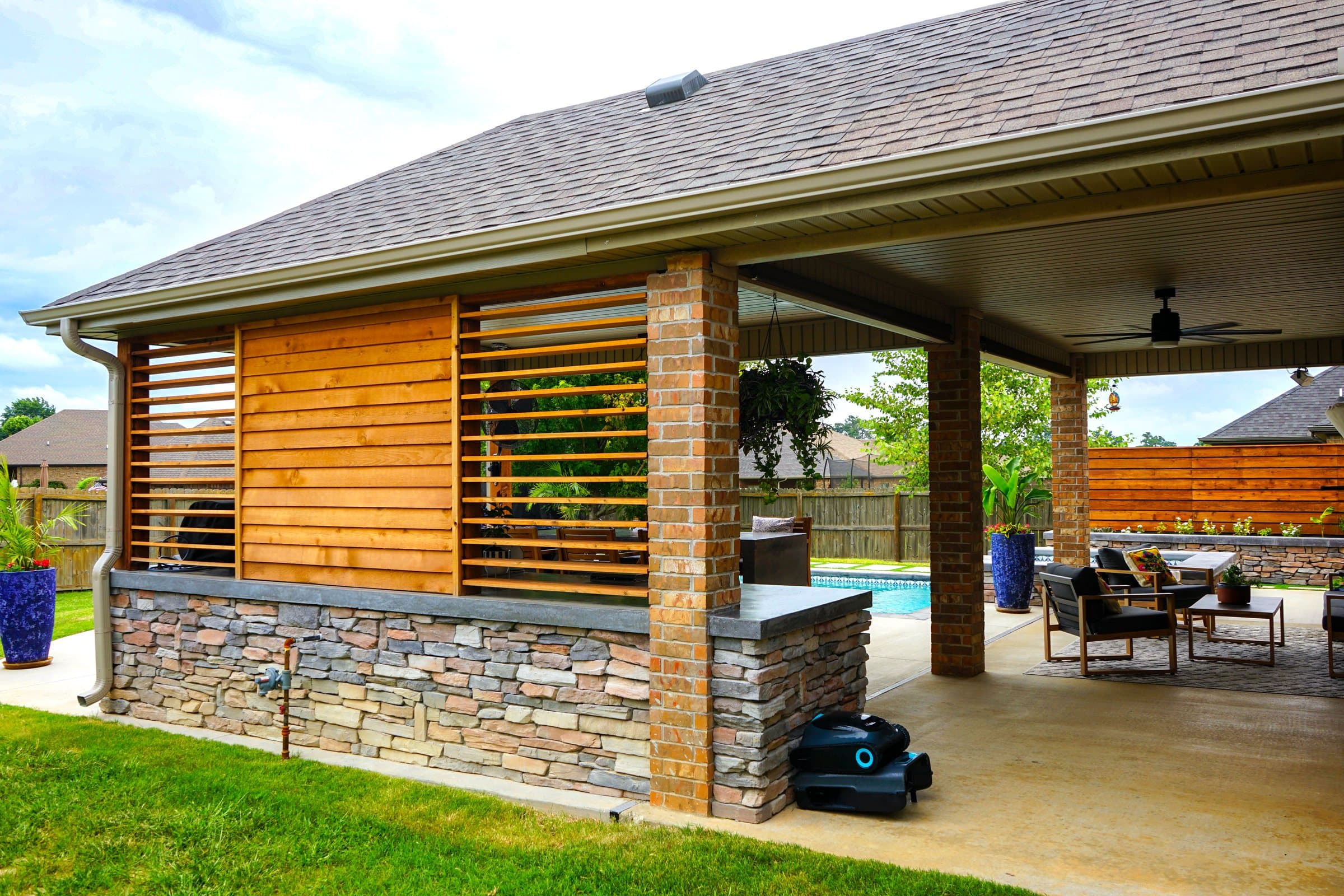
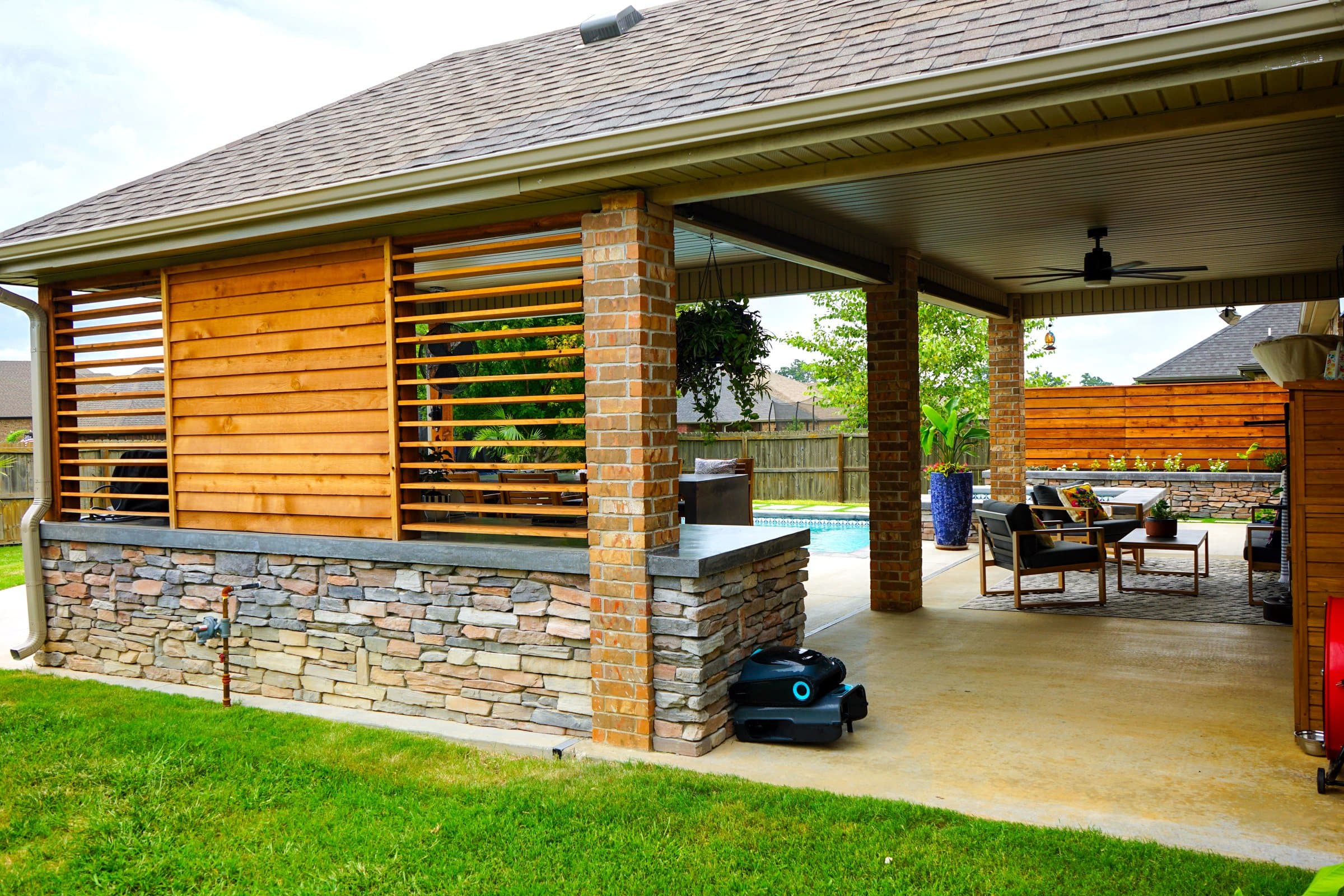
Humid still air is what makes an Arkansas July evening feel heavy. Seating placed where the prevailing breeze reaches it, rather than tucked into a corner behind a solid wall, is noticeably more comfortable. Under a covered patio or pavilion, a ceiling fan is close to essential, and a high, open roof lets warm air rise away from the seating. Slatted screens give privacy while letting air through, where a solid wall would block it.
Materials matter too. Paving in permanent shade and damp can grow algae and mildew and become slippery. Surfaces that get some sun and drain well dry out quickly after rain.
06Is a screened room worth it?
If you want to sit out at dusk in July without repellent, yes.
The Extension Service recommends tight-fitting screens on doors and windows to keep mosquitoes out of the home. A screened porch or a screened covered patio extends the same idea outdoors: a room with the air and the sound of the garden and none of the bites. It is a structure, so it involves design and, in most cities, a permit, and the screens need to be tight at every edge and door to work.
Many people split the difference: an open patio for most of the year and a screened room for the evenings when the mosquitoes are at their worst.
07Does planting near the patio attract mosquitoes?
Dense, damp, shaded planting gives adult mosquitoes somewhere to rest.
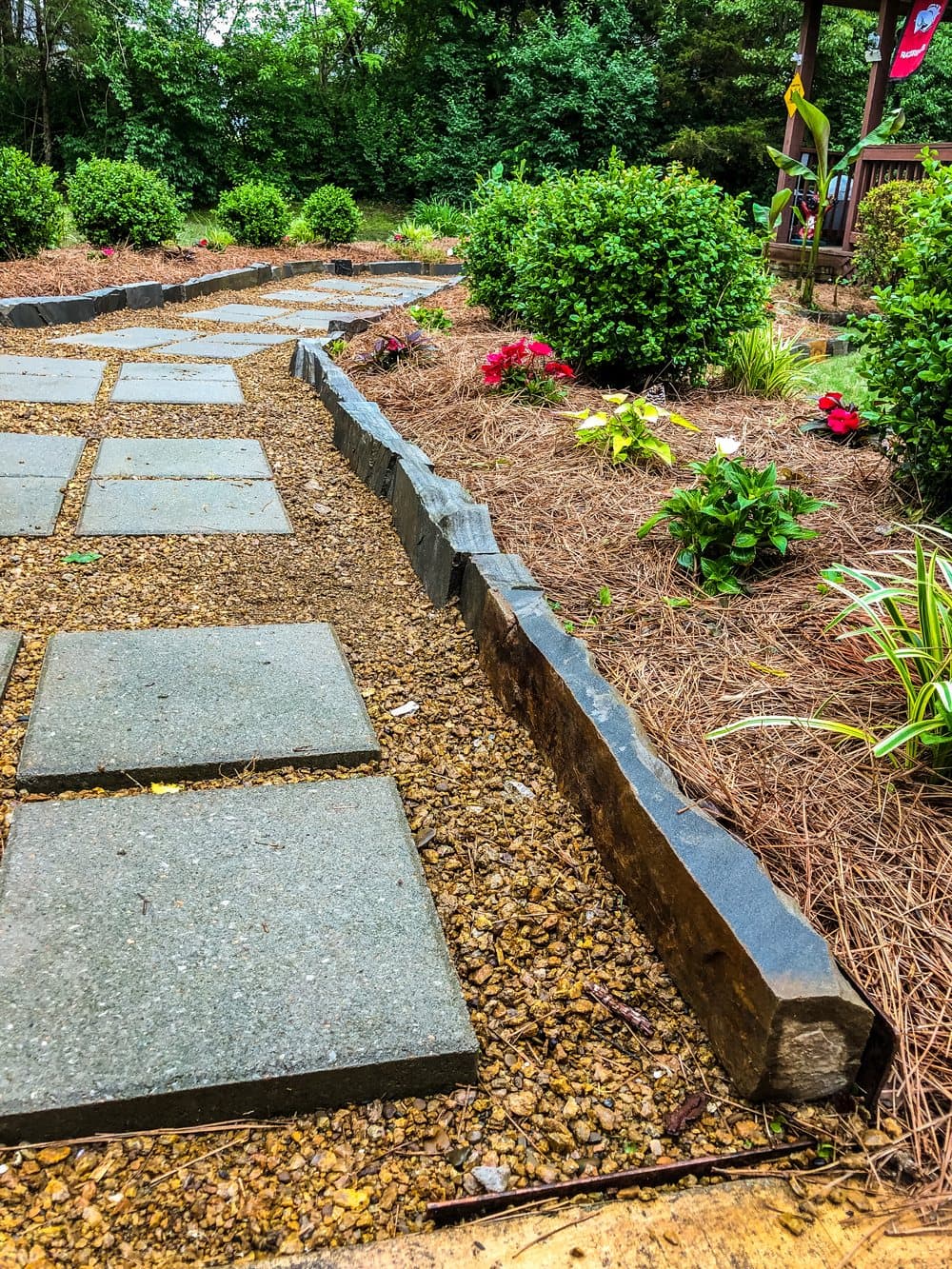
The Extension Service notes that adult mosquitoes rest in thickets and shrubs, which is why perimeter spraying targets them. Design planting beds beside seating so they drain well, get some air, and are not a wall of dense, damp foliage right against the chairs. Keep mulch from building up in low spots where water collects. Leave a gap between the seating and the thickest planting.
08What about sprays, candles and devices?
They help for an evening; design is what helps all summer.
The Extension Service describes pesticides as a short-term solution, and notes that foggers keep mosquitoes away for a few hours before they return, and that citronella products work best in still air. Because some species fly in from elsewhere, individual control on one property rarely succeeds completely. None of that makes removing breeding sites less important. It means the design should do the steady work, and sprays and candles are for the evenings when you have guests.
09What about the neighbours' water?
You cannot fix it, but you can talk about it.
If the neighbour next door has a birdbath that never gets flushed or a tarp full of rainwater, the mosquitoes do not stop at the fence. The Extension Service also suggests reporting drainage problems in ditches along roads. In a subdivision, a word with the HOA about a blocked swale or a stagnant detention pond can do more than anything you build.
10Do mosquitoes bite during the day here?
With the Asian tiger mosquito around, the problem is not only at dusk.
The University of Arkansas Extension Service notes that most mosquitoes are active at twilight and at night, but that the species breeding in containers around the home can be active during the day too. In a garden where the tiger mosquito is established, the afternoon on the patio can be as bad as the evening. That strengthens the case for removing every container of water near the house, because those are exactly the sites that species uses, and for a screened room if the patio is used through the day.
11Which maintenance points should be designed in?
Every drain, gutter and sump needs to be reachable, or it will not be cleaned.
A gutter on a pergola that needs a tall ladder and a balancing act gets cleaned once a year at best, and a blocked gutter is a breeding site. Design gutters with guards and with access from the ground where possible. Put cleanouts on buried drain lines. Use channel drains with removable grates, so the sediment that builds up can be lifted out. Where downspouts discharge, give the water a gravel apron or a pipe to a proper outlet rather than a splash block that leaves a puddle.
Planters are the other one. Built planters need drainage holes to gravel at the bottom and a route for that water out of the planter, or they become tanks.
12Does the surface around the patio matter?
Yes. Hollows in lawns and beds hold water as surely as a bucket.
Where the patio meets the lawn, a lip or a settled edge can create a strip that stays wet for days. Tyre ruts left by construction machinery do the same, and the Extension Service specifically notes construction ruts as ideal breeding sites for floodwater mosquitoes. A build that finishes with the surrounding ground regraded, topsoiled and seeded, not left rutted, is part of mosquito control whether anyone calls it that or not.
13How do we design for it?
We design the patio to drain, the structures to breathe, and the planting to stay dry, then show you where the maintenance points are.
Projects with us start around seven and a half thousand dollars, and financing is available through Acorn Finance if you would rather spread the cost than cut the scope. Call (479) 379-2226 or send the project form, and tell us what you are trying to do with the space.
FAQCommon questions
How do I stop mosquitoes on my patio in Arkansas?
Remove standing water near the house: fix low spots in paving, keep gutters and drains emptying, lose the planter saucers, keep water features moving. The UA Extension Service calls removing breeding sites the only real solution.
How long does water have to stand for mosquitoes to breed?
The UA Extension Service says larvae turn to pupae about seven to ten days after eggs hatch, which is why the CDC recommends emptying anything that holds water once a week.
Do fountains attract mosquitoes?
Moving water kept clean does not usually breed mosquitoes. Still basins and rain-filled features do.
How far do mosquitoes travel?
The Asian tiger mosquito has a short flight range, a quarter to half a mile, according to a University of Arkansas entomologist. Many of the mosquitoes in your garden breed nearby.
Is a screened porch worth it in Arkansas?
For regular use at dusk in summer, yes. It extends the Extension Service's advice on tight-fitting screens to an outdoor room.
How do I make a covered patio less humid?
Use a ceiling fan, raise and open the roof so warm air rises away, place seating where the breeze reaches it, and use slatted rather than solid screens.
Do gutters on a pergola breed mosquitoes?
They can if they hold water. Give them proper fall, keep them clean and send downspouts through smooth pipe to a real outlet.
REFSources
NEXTGet it looked at properly
Everything above is general guidance. What your ground actually needs is a site visit, and ours costs nothing. Francisco Gallardo walks it, reads the grade and the drainage, and tells you what is possible.