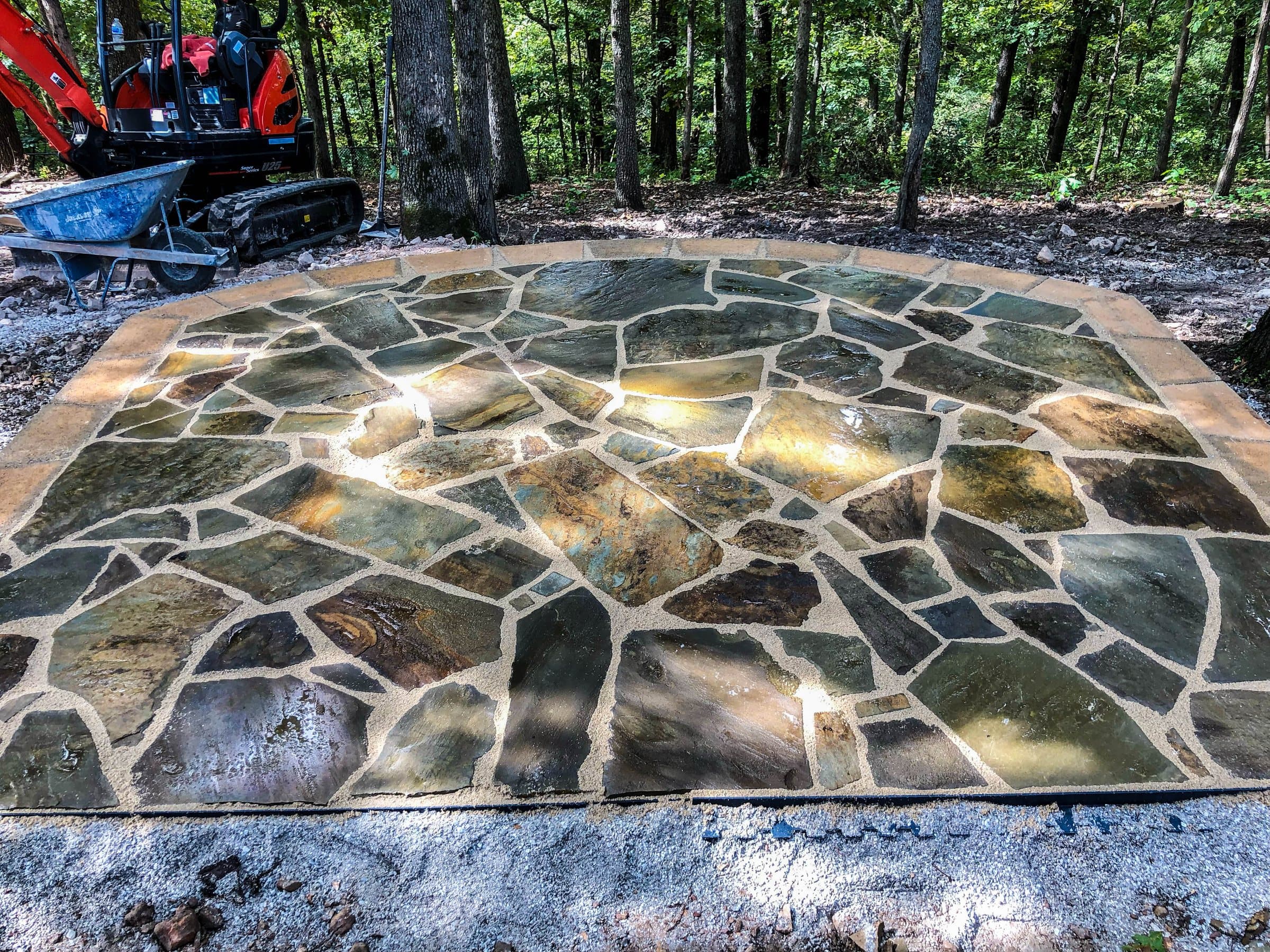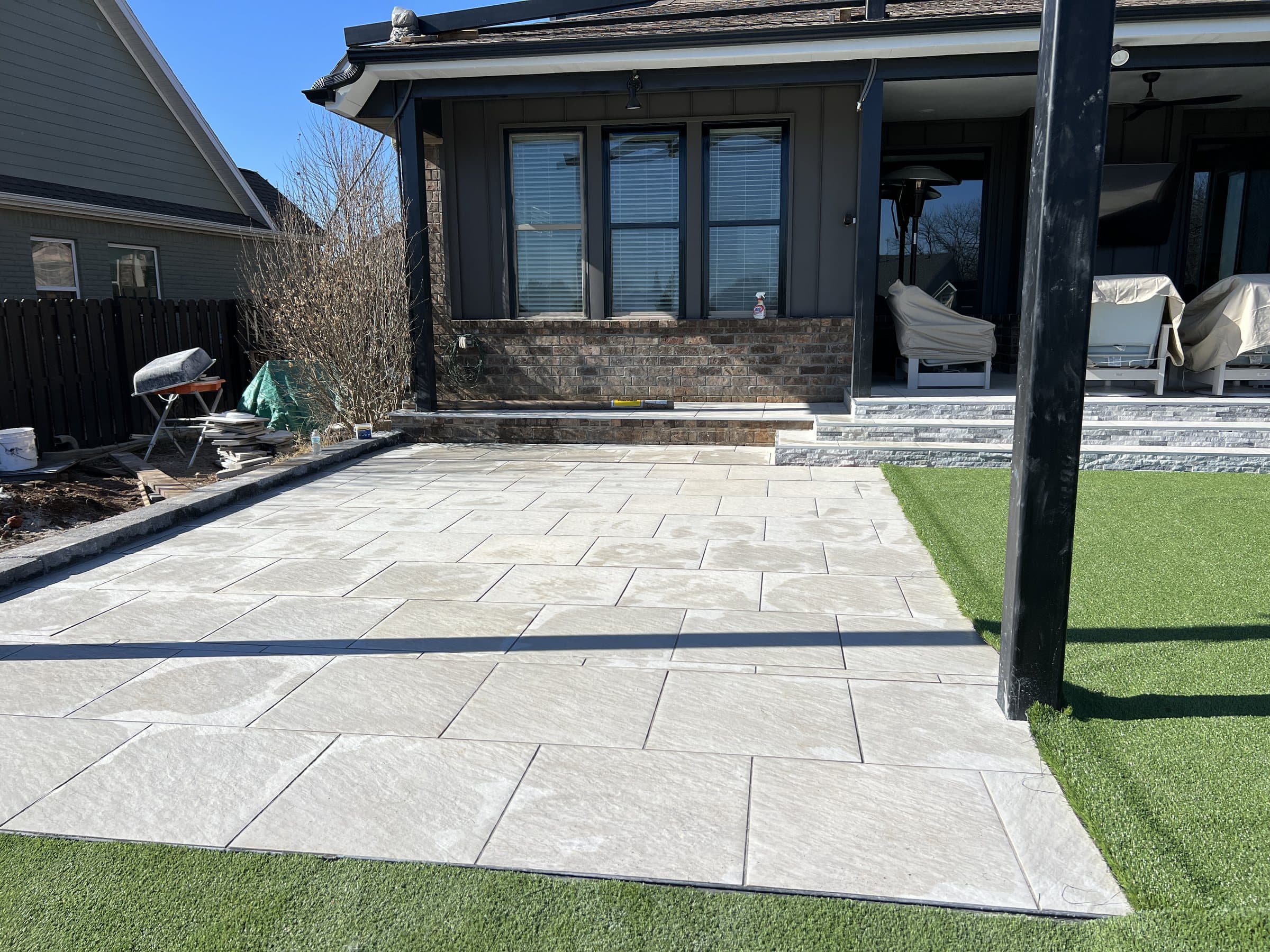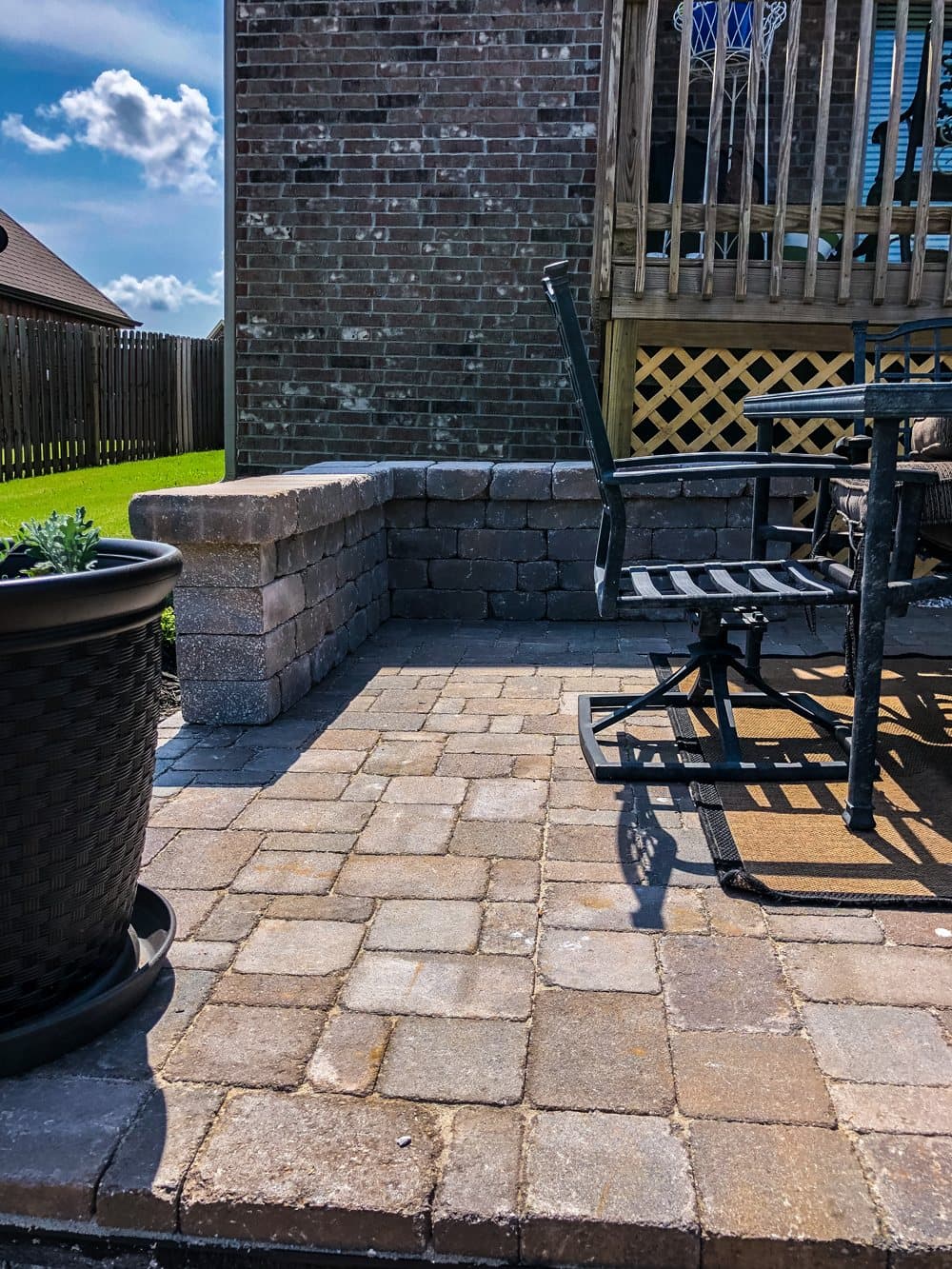

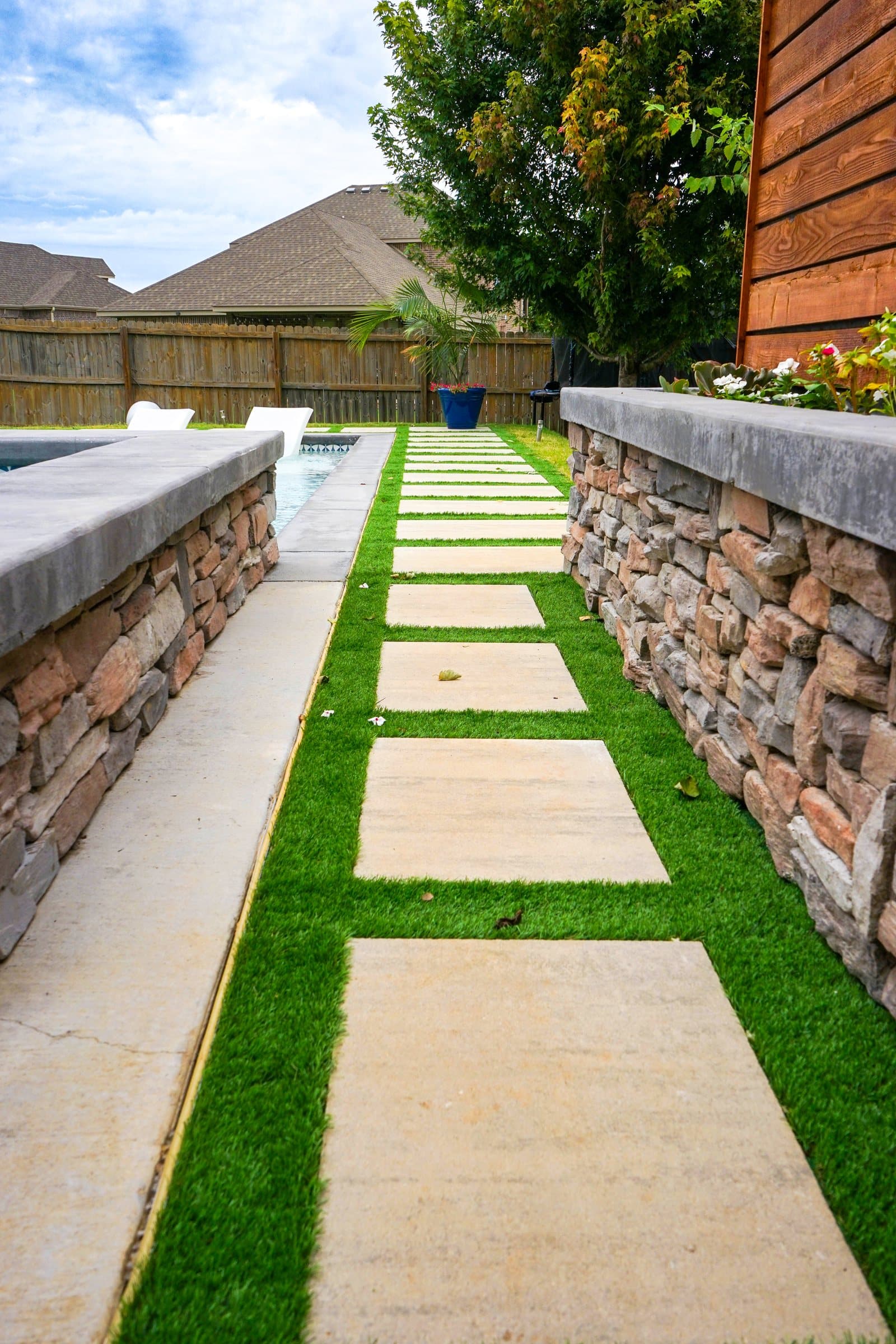
Most of Benton County is karst: the Boone limestone dissolves slowly in naturally acidic water, leaving springs, caves and sinkholes. The Arkansas Geological Survey notes that sinkholes in this formation typically contain red clay with chert fragments rather than open voids, so karst is usually a water and drainage question for a patio or wall, not a collapse risk. It still has to be looked for, because every site is different.
01What is karst, in plain terms?
Karst is a landscape shaped by rock that dissolves.
The Arkansas Geological Survey defines it as a landscape or terrain containing features such as springs, sinkholes, disappearing streams and caves. The rocks that produce it are limestone and dolostone, which contain calcium carbonate and are slowly dissolved by naturally acidic rainwater and groundwater. Over a very long time, water opens joints in the rock into channels, and the ground above settles into the hollows.
In Northwest Arkansas that rock is the Boone Formation, the surface rock of the Springfield Plateau. The Survey describes it as probably the most widespread and karst susceptible formation in the Ozark Plateaus, with abundant sinkholes, pits, springs and caves.
02Which towns are on karst and which are not?
The plateau towns are; the Boston Mountains towns are not.
The Survey is explicit that the Ozarks are a karst region overall but that not every location produces karst. The Springfield Plateau, Mississippian limestone and chert, does. The Boston Mountains, sandstone and shale, do not.
| Town | Physiographic region | Karst setting |
|---|---|---|
| Bentonville, Rogers, Springdale | Springfield Plateau | Yes, Boone Formation |
| Cave Springs, Lowell, Centerton, Highfill | Springfield Plateau | Yes, Boone Formation |
| Bella Vista, Pea Ridge, Gravette | Springfield Plateau | Yes, Boone Formation |
| Siloam Springs, Tontitown | Springfield Plateau | Yes, Boone Formation |
| Fayetteville, Farmington, Prairie Grove, Elkins | Boston Mountains | No; sandstone and shale instead |
The boundary between the two regions runs through Washington County, not along a town line, so if you are near it the excavation itself is the answer.
03Are sinkholes here the kind that swallow houses?
The typical Boone sinkhole is a clay-filled hollow, not an open shaft.
This is the most useful single fact about karst in Benton County. The Survey notes that sinkholes in the cherty Boone typically display only red clay containing chert fragments, and that it is uncommon to see bedded chert in their walls. In other words, the hollow has long since filled with the insoluble residue of the rock that dissolved. What you get on the surface is a shallow depression, a spot where water collects or disappears after rain, or a patch of ground that stays soft.
That does not mean nothing ever opens up; the Survey's own position is that each site has to be evaluated to determine whether its geology may become a problem for landowners or developers. It does mean the realistic risk for a patio, wall or pool deck is soft, wet ground and water finding a route, not a dramatic collapse.
04What are the signs of karst on your own lot?
Water behaviour is the giveaway, more than anything you can see.
| What you notice | What it can mean | What we do about it |
|---|---|---|
| A round, shallow dip in the lawn | A clay-filled sinkhole or settling fill | Probe it, dig it out, rebuild the ground in compacted lifts or move the design |
| A spot where rainwater vanishes fast | An opening into the rock below | Keep new runoff away from it; never pipe roof water into it |
| Ground that stays soft after dry weather | Clay pocket or seep | Excavate to competent ground under anything structural |
| A spring or wet seep on a slope | Groundwater leaving the rock | Design drainage around it, not over it |
| Rock at the surface in one place, deep clay a few feet away | Normal pinnacled Boone surface | Expect variable excavation and price it honestly |
None of these stops a project. All of them change where things go and how the ground under them is prepared.
05Does karst affect a patio or only a house?
It affects anything that relies on the ground staying where it is, but the fix for a patio is usually straightforward.
A paver patio is a flexible pavement on a compacted aggregate base. If there is a soft, clay-filled pocket under part of it, that part settles and you get a dip. The answer is to find the pocket during excavation, dig out the soft material to competent ground and rebuild with compacted aggregate. A good crew notices when the digger drops into softer material or when one area will not firm up under the compactor. A careless one keeps going.
Pools, retaining walls and roofed structures on footings are heavier and less forgiving, so they get more attention: probing, sometimes a geotechnical look, and a design that does not put a concentrated load on a spot nobody checked.
06Why is drainage the real karst issue?
Because water is what made the karst, and new hard surfaces change where water goes.
A patio, pool deck or roof concentrates rainfall that used to soak in across the lawn. On plateau ground, the soils below the surface are slow draining; the USDA descriptions of common local soils such as Nixa list permeability as very slow and surface runoff as high to very high. Concentrated water either runs off across the surface or finds a crack into the rock. Sending it deliberately into a sinkhole or a vanishing point is the worst option: it can wash clay out of the fill and open the feature up, and it sends whatever is on your patio straight toward groundwater.
The better approach is to spread and slow the water, keep it moving across the surface to a planned outlet, and keep it away from any known feature. Our drainage and grading guide covers the mechanics.
07Does karst change how a pool is built?
It changes how carefully the hole is read, because a pool is the heaviest, deepest and least forgiving thing most people put in a back garden.
A pool excavation goes well below a patio's and will usually meet the Boone limestone and chert on plateau ground. That brings the same variable digging as any excavation here, but it also exposes the rock surface over a large area, which is exactly where clay-filled pockets and open joints show themselves. A soft pocket under one end of a rigid shell is a real problem, so it is dug out and replaced with compacted material or the design responds to it. Water matters too: groundwater moving along the rock surface has to be managed around the shell, not ignored. None of this rules a pool out. It means the excavation is watched, not just dug.
08Can construction itself harm groundwater on karst?
It can, which is why a careful site keeps washout and fuel away from any sinkhole or opening.
On karst, water that disappears at the surface can reach groundwater and springs quickly rather than filtering slowly through soil; that is what the Survey's list of disappearing streams and springs means in practice. On a job site, the risks are ordinary ones: concrete washout, fuel from machines, and sediment from bare ground in a storm. The rules are ordinary too. Wash out away from any known feature, refuel on the driveway, and keep silt fencing or straw between bare ground and anywhere water leaves the site. It costs very little and it is the right way to work on this ground.
09Should you get a geotechnical survey before building?
For most patios, no. For pools, tall walls and structures near a known feature, it is worth discussing.
A geotechnical engineer drills or probes the site and reports on what is below. It is standard for houses and larger structures. For an at-grade patio, a careful excavation is itself the investigation, and the design adjusts to what is found. Where there is a visible depression near where a pool is going, a wall over four feet, or a covered structure on footings, the cost of looking properly is small against the cost of being wrong. Where a city requires an engineer, such as for taller retaining walls, that decision is already made for you.
10Is Cave Springs any different?
It is the same Boone ground, and the town is named for what that ground does.
Cave Springs is where our yard is, and it is a good example of karst being a normal part of life here rather than something exotic: springs and caves are exactly what the Survey says this formation produces, and the Survey notes caves and springs are likely to develop at or near the contact of the cherty Boone and the underlying St. Joe Limestone. Our Cave Springs permit guide covers the local rules.
11What should you ask a contractor about karst?
Three questions sort out who has thought about it.
First, what will you do if you hit a soft pocket or a void during excavation? The answer should be specific: dig out to competent ground, rebuild in compacted lifts, and tell you before carrying on. Second, where is the water from this new surface going? If the answer is "away from the house" without a destination, keep asking. Third, have you seen anything on this lot that concerns you? A contractor who walked the site should have an opinion.
Projects with us start around seven and a half thousand dollars. Francisco Gallardo, the owner, walks the ground himself before any number is given, because on this geology the number depends on what is under the turf. The visit costs nothing. Financing is available through Acorn Finance. Call (479) 379-2226 or send the project form.
FAQCommon questions
Is Northwest Arkansas on karst?
The Springfield Plateau part is: Benton County and the north of Washington County, on the Boone Formation. The Boston Mountains around Fayetteville and south are sandstone and shale and do not form karst.
Are sinkholes common in Bentonville and Rogers?
Sinkholes are a normal feature of the Boone Formation. The Arkansas Geological Survey notes most contain red clay with chert fragments, so they usually show as shallow hollows rather than open holes.
Can I build a patio over a sinkhole?
Not directly over soft fill. The soft material is dug out to competent ground and rebuilt, or the design moves. A shallow, stable depression can often be regraded and built over once checked.
Should I drain my gutters into a sinkhole?
No. Concentrated water can wash out the clay fill and enlarge the feature, and it carries whatever is on your roof and patio toward groundwater.
Do I need a geotechnical report for a patio in Benton County?
Usually not for an at-grade patio. For a pool, a tall retaining wall or a structure near a known depression it is worth considering.
How do I know if my lot has karst features?
Look for round depressions, places where water disappears quickly, soft spots that stay wet and seeps on slopes. A site walk and careful excavation confirm it.
Does karst make a pool riskier?
It makes the ground investigation more important, because a pool is a heavy, rigid structure. Karst does not rule out a pool.
REFSources
- Arkansas Geological Survey: Karst in the Arkansas Ozarks, Part 1arkansasgeological.wordpress.com
- Arkansas Geological Survey: Karst in the Arkansas Ozarks, Part 2 (Springfield Plateau)arkansasgeological.wordpress.com
- USDA NRCS Official Soil Series Description: Nixasoilseries.sc.egov.usda.gov
NEXTGet it looked at properly
Everything above is general guidance. What your ground actually needs is a site visit, and ours costs nothing. Francisco Gallardo walks it, reads the grade and the drainage, and tells you what is possible.