
Yes, Arkansas quarries real building stone, mostly sandstone flagstone and fieldstone, and it suits patios and walls in Northwest Arkansas. The Arkansas Geological Survey names the Hartshorne and Atoka formations in Sebastian, Franklin, Logan and Van Buren counties as the main source of flaggy sandstone. Choose it for colour, texture and a local story; choose the thickness and the setting method for freeze-thaw.
01What stone actually comes from Arkansas?
Mostly sandstone, with some limestone and dolostone, from a handful of counties.
The Arkansas Geological Survey defines dimension stone as rock removed from its original site for use (fieldstone) and rock that is broken, sawn, ground or polished (processed stone) for building or ornament. In Arkansas that means limestone and sandstone. The Survey puts the bulk of flaggy sandstone production in the Hartshorne and Atoka formations of the western Arkansas Valley, in Sebastian, Franklin, Logan and Van Buren counties, with Ordovician dolostone from the Cotter Formation quarried in Carroll County and limestone from Independence County.
It is a real industry rather than a novelty. The Encyclopedia of Arkansas, citing the Survey, puts annual Arkansas dimension stone production at approximately 100,000 tons valued at $8.5 million as of 2009, and notes that most of the high quality stone is used in state.
| Stone | Where it comes from | What it is good for | Watch for |
|---|---|---|---|
| Arkansas sandstone flagstone | Hartshorne and Atoka formations, western Arkansas Valley | Patios, walks, pool decks, wall caps, steps | Thickness and bedding plane; how it is set |
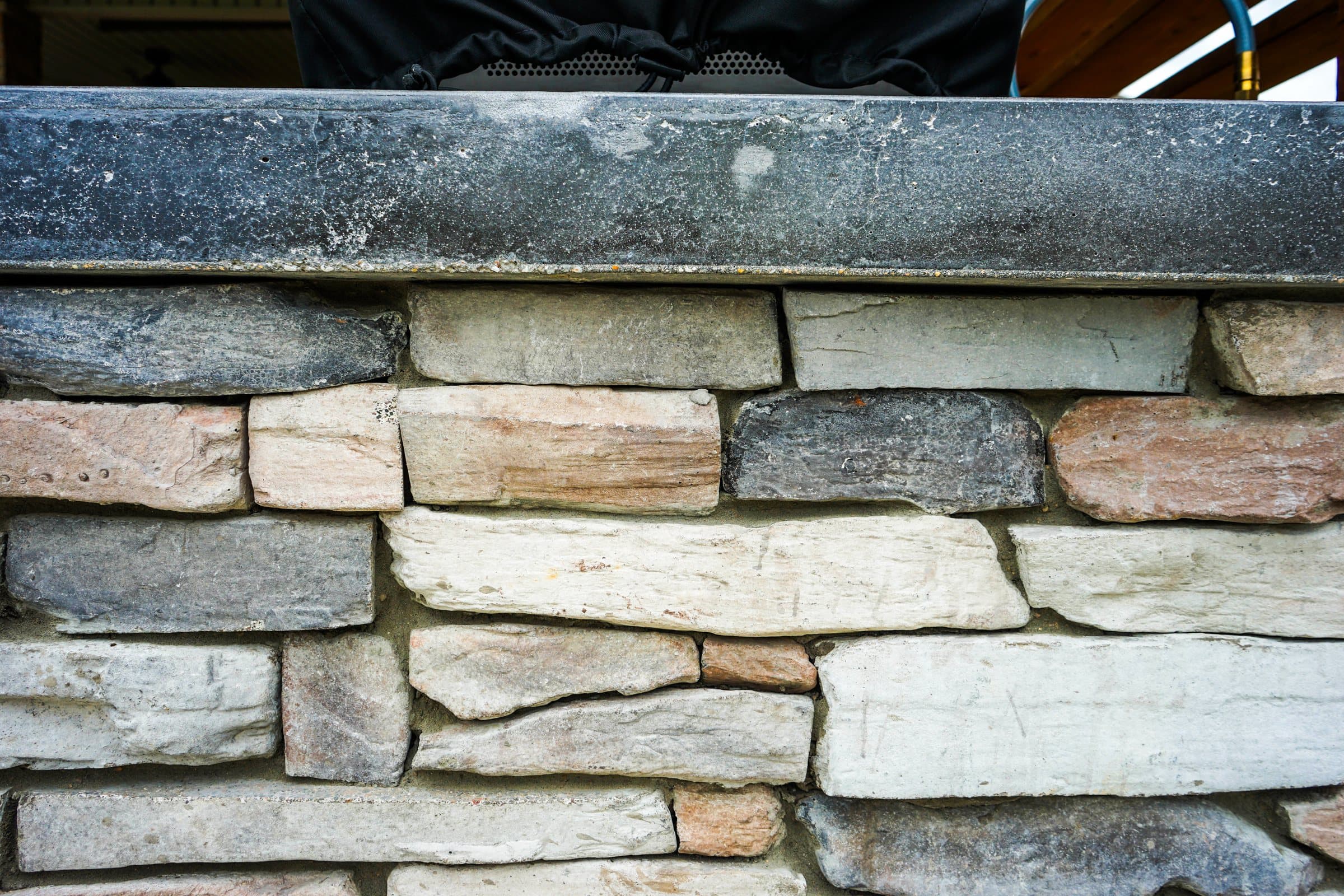
| Arkansas fieldstone | Picked from sandstone hillsides in the Ozarks, Arkansas Valley and Ouachitas | Dry and mortared walls, facing, fireplaces, rustic walks | Irregular shapes; more labour to lay |
| Arkansas limestone and dolostone | Independence County; Cotter Formation, Carroll County | Cut steps, caps, veneer, interior and exterior finishes | Availability; cut stone costs more to work |
| Imported natural stone (travertine, bluestone, granite and others) | Out of state or overseas | Very consistent calibrated units; specific colours | Lead times; matching replacements later |
| Porcelain pavers | Manufactured | Uniform, low absorption, precise sizes | Not stone; needs its own setting method |
02Fieldstone or quarried stone: what is the difference?
Fieldstone is picked up from the surface and is weathered on every face; quarried stone is cut from the bed and shows a fresher colour.
The Encyclopedia of Arkansas entry on dimension stone draws the line clearly. Field stone is picked from loose debris on hillsides, may carry moss, and has minor rounding from weathering and movement downslope. Sandstone dominates it because it forms in thin, flaggy beds. Flagstone is a variety of field stone that consists of relatively thin plates. Dressed or quarried stone is broken or sawn to dimension from a quarry, and because it is relatively fresh and unweathered it is a different colour from the same rock found on the surface.
For a wall, fieldstone gives you the lichen and the rounded, time worn faces that make a wall look as though it has always been there. For a patio, quarried flagstone gives you flatter faces and more even thickness, which is what lets people put a chair down without it rocking. The same entry is candid that highly worked or polished stone costs more than rough block, because stone is labour intensive to produce.
03Can you use the rock dug out of your own yard?
Sometimes for boulders and dry-laid edges, rarely for a patio or a structural wall.
Most of Benton County sits on the Boone Formation, and what an excavator turns up there is chert and limestone in red clay. Our guide to what is under your yard explains the geology. Those pieces are irregular, often fractured, and come out of the ground coated in clay. Good ones can be kept for a boulder grouping or a dry edge to a planted bed, which ties the garden to the ground it sits on. They are not a substitute for graded stone in a wall that holds soil back, where the engineering, not the look, decides the material. Our guide to why retaining walls fail covers that side.
The Boone has produced fine stone before. The Encyclopedia of Arkansas records that a block of Early Mississippian St. Joe Limestone, the lower member of the Boone, was quarried near Marble Falls in Newton County and shipped in 1836 for the Washington Monument. That was a selected quarry bed, not backyard spoil.
04How does Arkansas stone compare with imported stone?
Local stone wins on character and on matching the region; imported stone wins on consistency and on specific colours.
A natural sandstone from the Arkansas Valley will vary from piece to piece and from pallet to pallet. On a rustic or Ozark style house that variation is the point. On a strictly modern house it can look busy, which is why calibrated imported stone or a manufactured slab often suits that architecture better. Our comparisons of natural stone and concrete pavers and travertine and porcelain for a pool deck go through those trade-offs in detail, so we will not repeat them here.
There is also a practical argument for local stone that rarely gets made: replacement. If a piece cracks in ten years, stone from a producer a few hours away is far easier to match than a colour that was discontinued overseas.
05Does Arkansas sandstone survive Northwest Arkansas winters?
Chosen and laid properly, yes. Chosen for looks alone and laid thin on a poor base, it can spall and loosen.
Sandstone is sand grains cemented by clay, silica, carbonate or iron oxide, as the Survey puts it, and the cement varies from bed to bed. That is why two sandstones that look alike can behave differently through freeze and thaw. Ask the supplier which formation and quarry the stone comes from, ask for thickness suited to the use, and set it on a base that drains. Water trapped in or under stone is what freezing damages. Our guide to freeze-thaw cycles in Northwest Arkansas explains the mechanism, and sealing covers when a sealer helps and when it traps moisture.
06Where can you see Arkansas stone before you choose?
At a stone yard that stocks it, where you can ask exactly where each pallet was quarried.
One example we checked at source: Schwartz Stone Company says on its own site that it was founded in 1949 in Paris, Arkansas, that its base of operations is still on the original quarry site in Logan County, and that it has an additional yard and sales office in Springdale. That fits the Survey's picture of Logan County as a sandstone producing county. We name it because the claim is verifiable, not as an endorsement, and other yards in the region stock Arkansas stone alongside imported stone.
Whichever yard you visit, ask three questions. Where was this quarried? Is it the same bed as the pallet you will actually deliver? And what thickness do they recommend for a patio rather than a wall? A yard that answers the first question vaguely is usually selling imported stone with a local sounding name.
07How should local stone be used in a design?
Where people touch it and look at it closely, rather than everywhere.
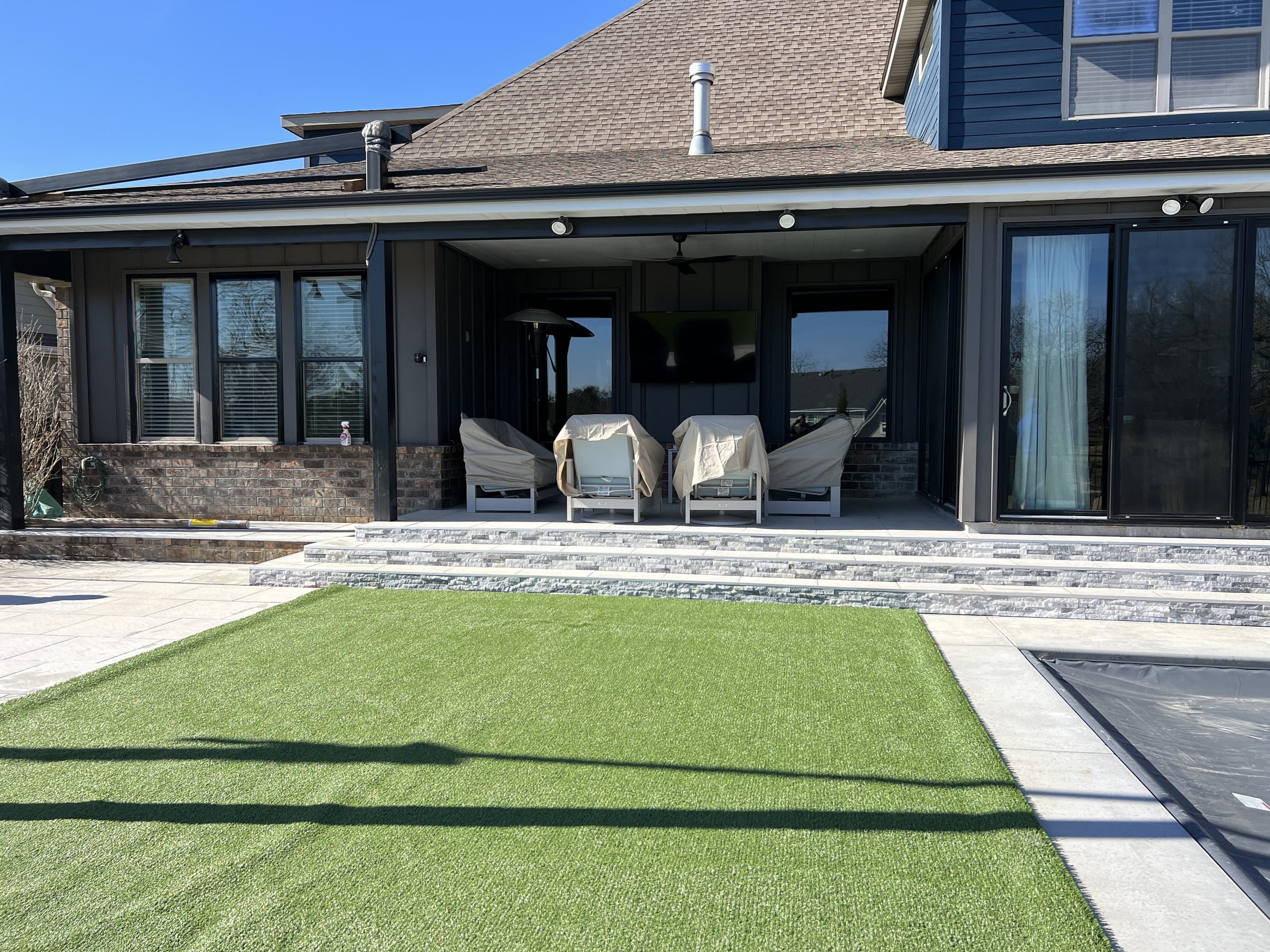
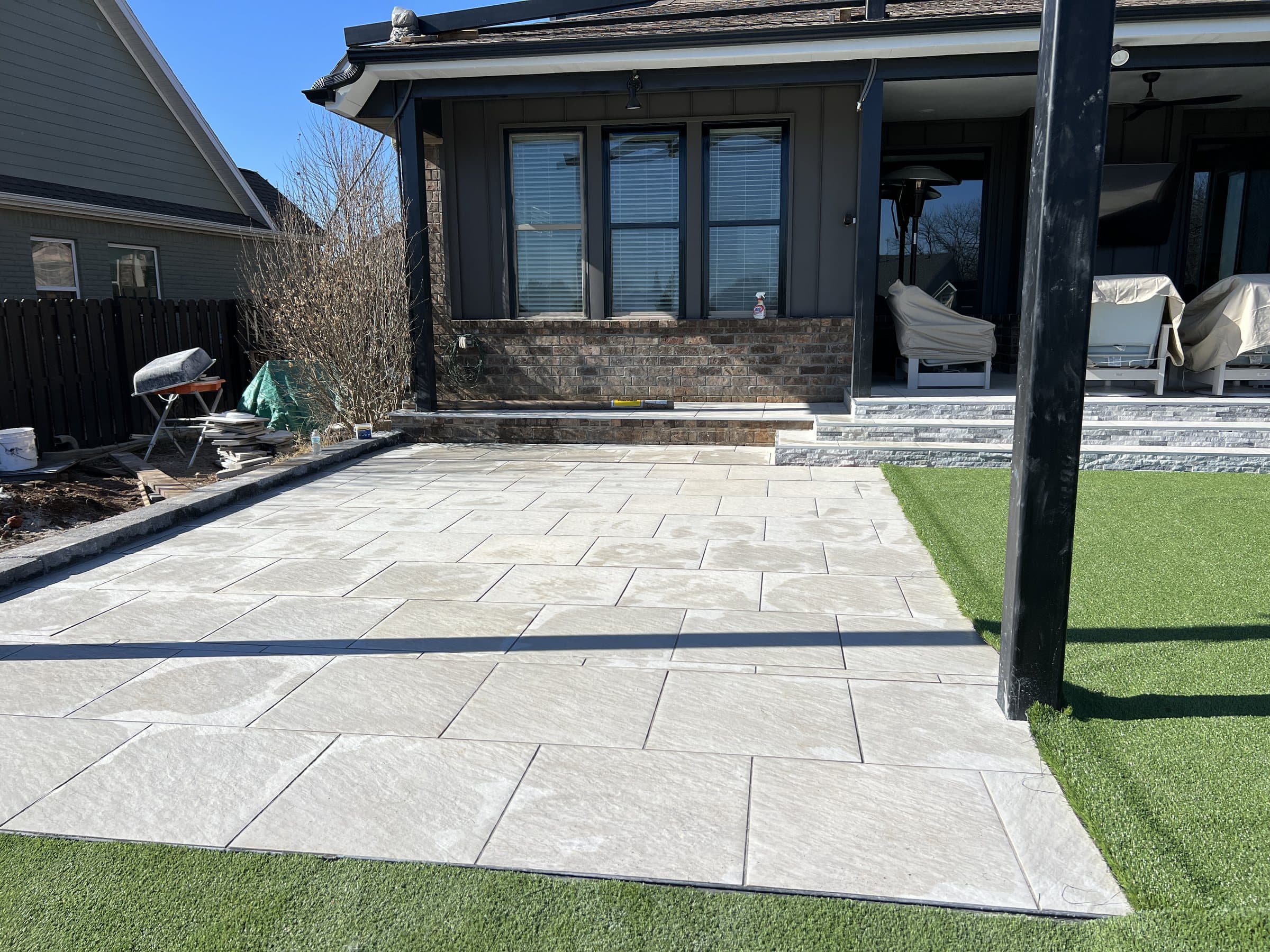
Natural stone carries a lot of texture. Used on every surface it becomes heavy. Used on the walls, the seat edges, a fire surround or the steps, with a calmer field around it, it reads as deliberate. On the Swindle build in Cave Springs we used stacked stone on the walls and the raised spa, and large-format pavers for the field: the stone does the close-up work and the field stays quiet underfoot.
Mortared or dry laid is the other design decision. A dry laid wall moves a little and drains through itself, which suits a garden wall on a slope. A mortared wall is stiffer and needs a proper footing and drainage behind it. Our guide to designing a sloped backyard covers where each one belongs.
For a patio, the same choice applies to the floor. Flagstone set on a compacted, free-draining base with stone dust or sand joints can be lifted and relaid if the ground moves. Flagstone mortared onto a concrete slab gives a firmer, cleaner surface for furniture, but it is only as good as the slab beneath it, and a crack in the slab will come through the stone.
08What should a quote for a stone patio or wall specify?
The stone itself, by source and thickness, and everything that happens underneath it.
Natural stone quotes are harder to compare than paver quotes because the material varies so much. A useful quote names the stone and where it was quarried, gives the thickness range for the patio and for the wall caps, says whether it is fieldstone, split flagstone or sawn, and states whether pieces are fitted tightly or laid with wide joints. It should also describe the base: depth, aggregate, compaction and where water goes. For a wall, it should state the footing, the drainage behind the wall and whether an engineer is involved, which our guide to retaining wall cost covers.
Ask to see the actual pallets, or photographs of them, before delivery. With a natural material, the sample in a showroom and the stone that arrives can differ, and it is much easier to reject a pallet in the yard than to argue about colour once half of it is laid. Our guide to reading a hardscape quote covers the other lines to check.
Projects with us start around seven and a half thousand dollars. Francisco Gallardo, the owner, walks the site himself before any number is given, and the design conversation starts there. Financing is available through Acorn Finance. Call (479) 379-2226 or send the project form.
FAQCommon questions
Is there local stone in Northwest Arkansas for a patio?
Yes. Arkansas sandstone flagstone and fieldstone are quarried in-state, mostly in the western Arkansas Valley, and stone yards in the region stock it alongside imported stone.
What is Arkansas flagstone?
Thin, flat plates of sandstone. The Arkansas Geological Survey says most flaggy sandstone comes from the Hartshorne and Atoka formations in Sebastian, Franklin, Logan and Van Buren counties.
What is the difference between fieldstone and flagstone?
Fieldstone is picked from the surface and weathered on every face. Flagstone is a thin, plate-like variety, and quarried flagstone is flatter and more even, which makes it better for a patio.
Can I reuse the rocks from my excavation?
Good pieces of chert or limestone can make boulders or a dry edge to a bed. They should not replace graded stone in a retaining wall or a patio surface.
Is local stone cheaper than imported stone?
Not automatically. Price depends on how much the stone is worked and on transport. Rough stone costs less to produce than sawn or polished stone.
Will Arkansas sandstone crack in the winter?
Not if it is the right stone at the right thickness, set on a base that drains. Trapped water is what freeze-thaw damages.
Does natural stone suit a modern house?
Used sparingly, yes: on a wall, steps or a fire surround, with a calmer field around it. On every surface it can overwhelm a minimal house.
REFSources
- Arkansas Geological Survey: Dimension Stonegeology.arkansas.gov
- Arkansas Geological Survey: Sandstonegeology.arkansas.gov
- Encyclopedia of Arkansas: Dimension Stone Miningencyclopediaofarkansas.net
- Schwartz Stone Company: company history and locationsschwartzstone.com
NEXTGet it looked at properly
Everything above is general guidance. What your ground actually needs is a site visit, and ours costs nothing. Francisco Gallardo walks it, reads the grade and the drainage, and tells you what is possible.