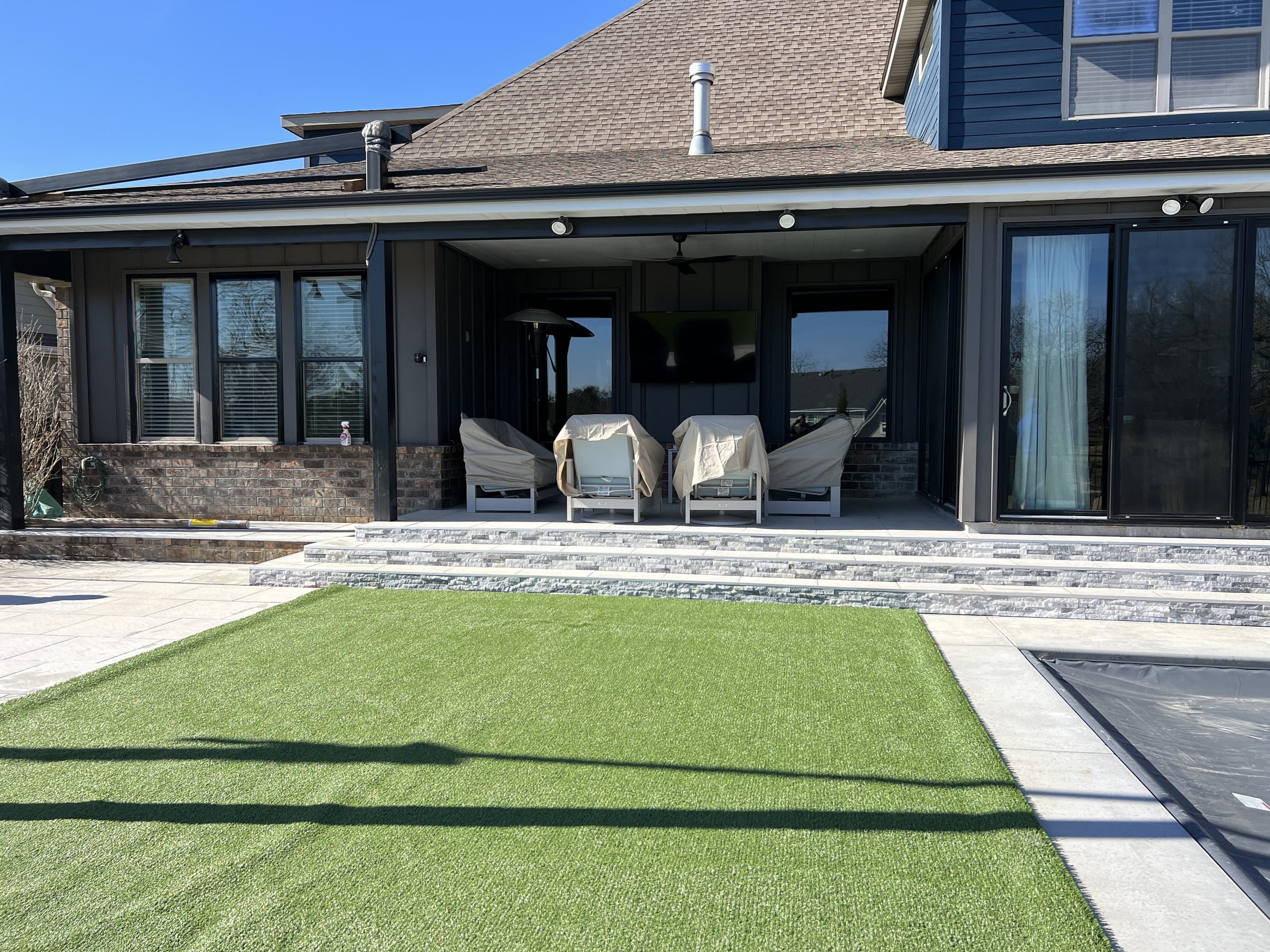

A trail-ready backyard puts three things in the order you arrive home muddy: a hard wash bay that drains to gravel or planting, covered lockable gear storage beside it, and a hard path to the door. In Bentonville, wash water must stay out of the storm drain, and the outdoor tap needs backflow protection and frost-proofing under the Arkansas Plumbing Code.
01Why is this a Bentonville question?
Because a lot of households here ride from the door, several times a week, all year.
OZ Trails, the regional trail network's own site, describes Slaughter Pen as 40-plus miles of single-track running beside the paved Razorback Regional Greenway and past Crystal Bridges, and Coler Mountain Bike Preserve as sitting about two miles west of downtown Bentonville. The Back 40 in Bella Vista is a 21-mile loop with more trail inside it. Living near any of them means bikes come home wet and caked in red clay, and the backyard either absorbs that or the garage floor and the kitchen do.
Nothing here is complicated, but it has to be designed as one sequence rather than bought as separate products. Get the order right and the mud stops at the first station.
02Where should a bike wash station go?
Between the route you ride in on and the place bikes are stored, with water and drainage already nearby.
Walk the route you actually use: gate, side yard or driveway. The wash bay belongs on that line, before storage and before the door. Put it where a hose connection can be close without a long trench, on the downhill side of the paving so wash water leaves the hard surface rather than crossing it, and away from the house wall so spray and grit stay off the siding.
| Element | What it needs | Common mistake |
|---|---|---|
| Wash bay | A hard, slightly falling surface; a bike stand fixed to it; a clear drainage outlet | Setting it on turf or loose gravel, which becomes a mud pit |
| Water supply | An outdoor hose connection with backflow protection, frost-resistant or drained for winter | A plain hose bibb that freezes, or one with no vacuum breaker |
| Drainage | Wash water sent to gravel, a planted soakaway or landscaped ground on your own lot | Piping it into the street gutter or a storm inlet |
| Gear storage | Covered, ventilated, lockable, next to the wash bay | A sealed box that stays damp and smells by July |
| Path to the house | Continuous hard surface from bay to door, with a boot scrape or mat zone | Stepping stones in lawn, which carry mud straight inside |
| Light and power | Light at the bay and store; an outdoor circuit if you charge e-bikes | Extension leads across wet paving |
03What surface works for a wash bay?
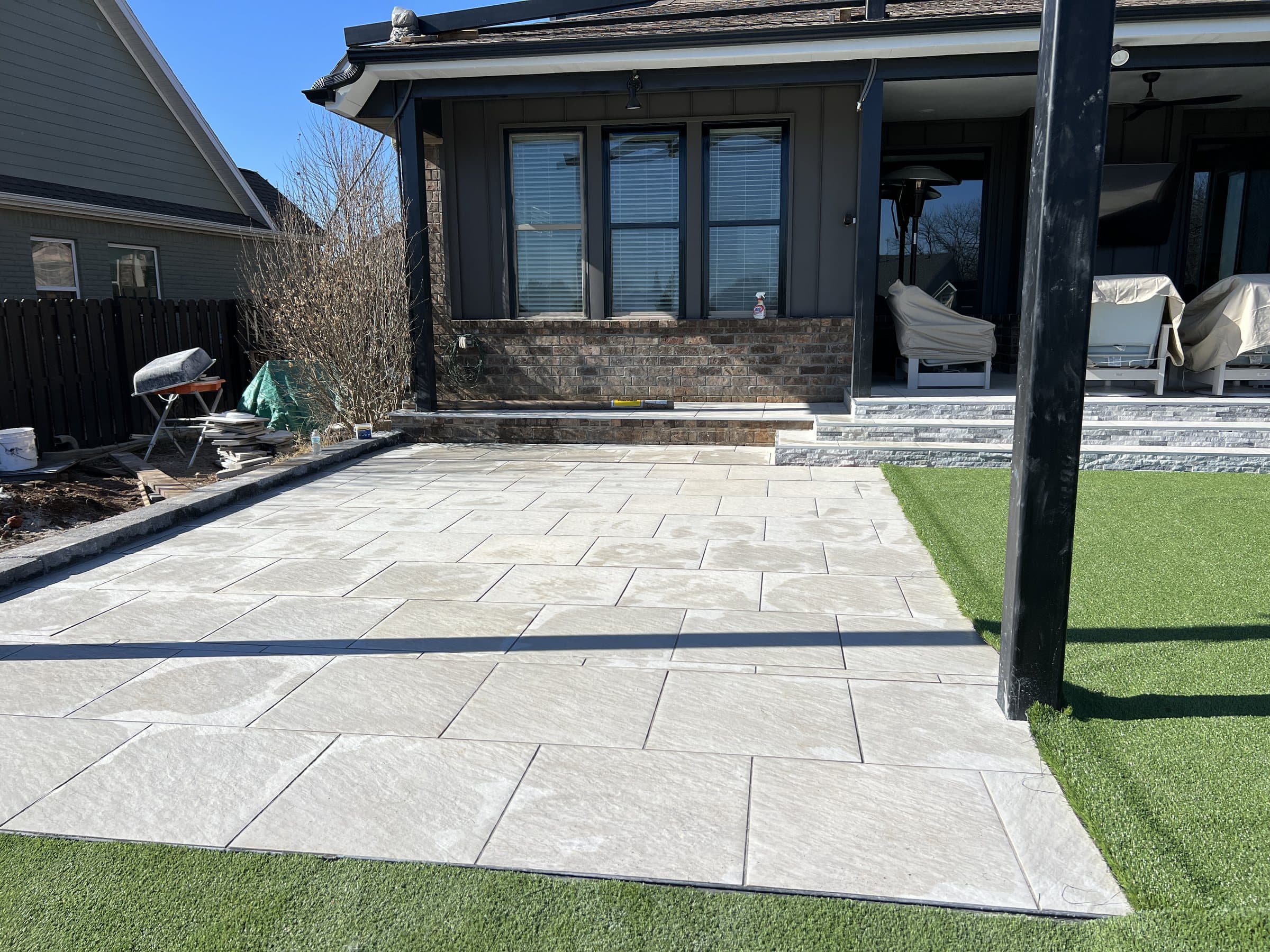
Concrete pavers or a jointed concrete pad on a proper aggregate base, falling gently to one edge.
A wash bay sees water, grit, dropped tools and a bike stand, every week. Pavers are forgiving here: a stained unit can be lifted and swapped, and the joints tolerate small movement. Concrete works too, jointed so it cracks where you choose. Either way the base matters more than the top. The Concrete Masonry and Hardscapes Association's application guide gives a minimum aggregate base of 4 to 6 inches for walks, and a wash bay is at least a walk. On clay that holds water, more may be needed, which our guide to patio base depth explains.
Give the bay a consistent fall toward its outlet side. Our guide to how much a patio should slope gives the figures. Choose a textured finish; a smooth surface covered in wet clay is slippery under cleats.
04Where is bike wash water allowed to go in Bentonville?
Onto your own gravel or planting, not into the storm drain.
Bentonville's stormwater ordinance, Ordinance 2006-167, says no person shall release into the storm drainage system any discharge that is not composed entirely of uncontaminated stormwater, and it lists sediment and cleaning products among the common contaminants. It also prohibits illicit connections, meaning any drain, surface or subsurface, that lets a prohibited discharge reach the storm system. It does list occasional non-commercial vehicle washing among acceptable discharges, but a dedicated wash bay used several times a week with degreaser is not the thing to test that exemption on.
The practical answer is simple. Grade the bay so its water runs into a gravel strip or a planted soakaway on your lot, where the sediment settles and the water soaks in. Never plumb a wash bay drain into a street inlet or a yard drain that connects to one. Use biodegradable bike cleaners, and brush dried mud off before you wash it. If your lot already struggles with water, read our drainage and grading guide first, because a wash bay adds water where you may already have too much.
05What does the water supply need?
Backflow protection by code, and a way to survive a hard freeze.
The Arkansas Plumbing Code, section 608.16.4.2, requires sillcocks, hose bibbs, wall hydrants and other openings with a hose connection to be protected by an atmospheric or pressure type vacuum breaker or a permanently attached hose connection vacuum breaker. That stops dirty water from a hose left in a bucket being drawn back into the house supply. The code's table of backflow devices also lists frost-resistant, automatic-draining vacuum breaker wall hydrants, which is the kind of fitting that suits a tap used through the winter.
Any new line to a freestanding wash post has to be buried below frost depth or drained down for winter. Our guide to frost depth in Northwest Arkansas gives the local figure. The plumbing connection itself is plumber's work; we coordinate that trade within the project.
06What about light and power, including e-bike charging?
Light the wash bay and the store properly, and put any charging indoors or under cover on a circuit an electrician has sized for it.
Rides end at dusk more often than not, and a wash bay in the dark is where tools get lost and ankles get turned. A downlight over the stand and low light along the path to the door is enough. Our guide to patio and walkway lighting covers fittings and glare.
E-bikes change the brief. Batteries want to be charged somewhere dry and not in direct sun, and an extension lead across wet paving is exactly what should not happen. If e-bikes are part of the household, plan an outdoor-rated circuit to the store at the design stage, while trenches are open, rather than cutting paving later. The electrical work itself belongs to an electrician; the hardscape just has to leave the route for it.
07Can a wash bay and store look good, not just work?
Yes, if they are designed as part of the garden rather than bolted onto it.
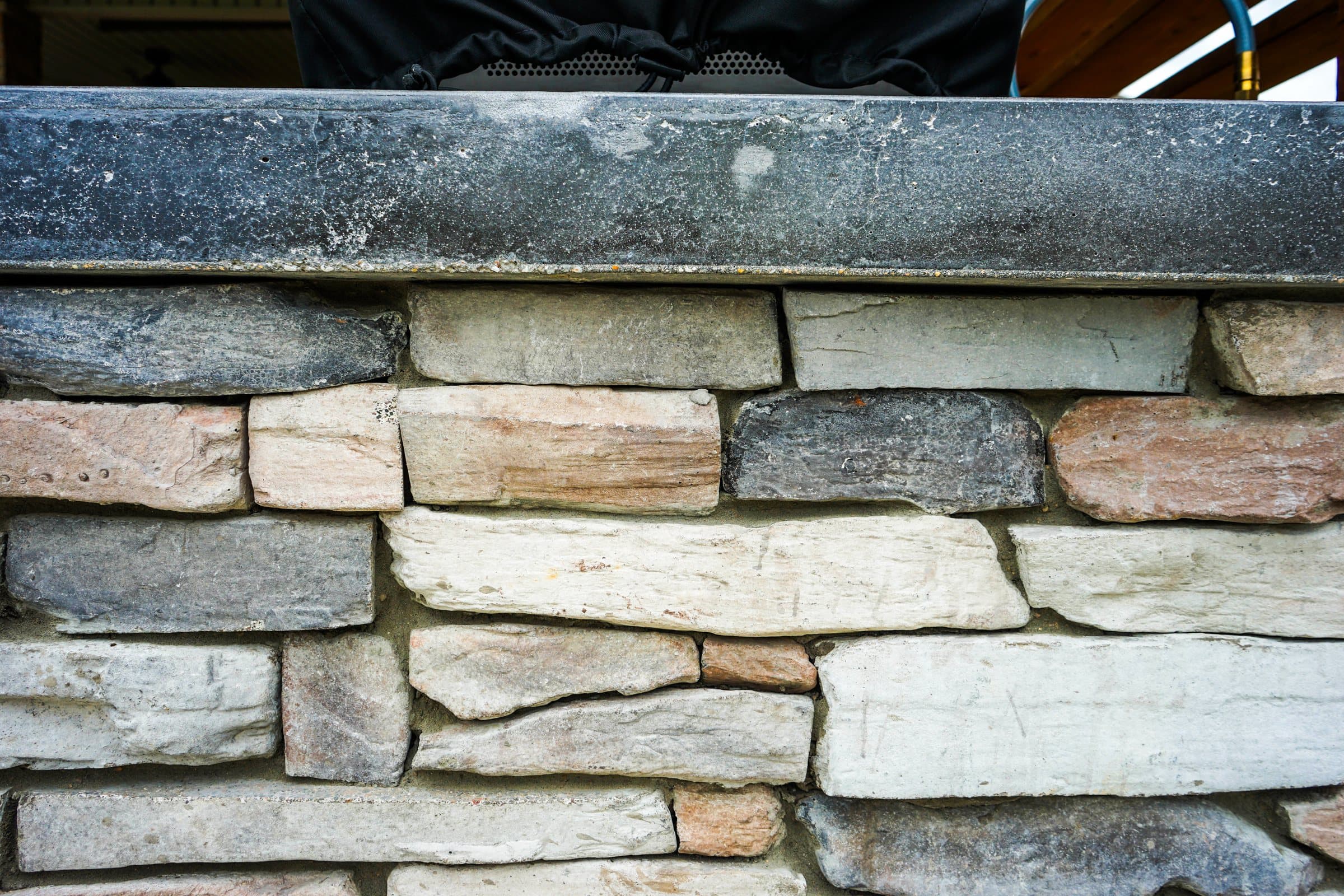
Use the same paving as the rest of the hardscape so the bay reads as a small court rather than a utility pad. Clad the store in the same timber as a fence or pergola. Screen the bay from the main terrace with planting or a slatted panel so that a muddy bike on the stand is not the view from the dining table. Done that way, the trail kit becomes one more room of the garden, with its own job, instead of clutter along the side of the house.
08How should gear storage be built?
Covered, ventilated and next to the wash bay, so wet kit goes straight in and dries.
The failure mode for bike storage in this climate is damp. A sealed plastic box in full sun is an oven in July and a sponge in March. Better options are a roofed bay against a fence or wall with slatted sides, a small timber store with vented gables, or space under a pavilion roof if you have one. Floor it with the same paving as the wash bay so it can be hosed out, raise hooks and racks off the floor, and make it lockable, because good bikes are worth stealing.
If the store shares a structure with a covered patio, keep it at the service end, away from the seating. Our guide to pergolas, pavilions and covered patios helps decide what structure the yard can take.
09Which surfaces keep mud out of the house?
Continuous hard paving from the wash bay to the door, and nothing you have to step off it for.
Stepping stones in a lawn look good on a plan and carry mud straight inside in practice, because every foot lands in the grass between them. Loose pea gravel sticks to cleats and ends up in the house too. A continuous paved path, at least as wide as a person pushing a bike, is the surface that works. A coarse brushed finish or a textured paver at the door gives shoes one more scrape.
Next to the path, artificial turf stays usable in wet months when a clay lawn turns to mud, which matters if children and dogs come in the same way as the bikes. Our comparison of artificial turf and grass covers where each one makes sense.
10What does a trail-ready setup cost?
It depends on the distances, the ground and what already exists; we price it at the site visit rather than quote a figure that would be wrong for most yards.
The cost drivers are predictable: how far the water line and any power have to travel, how much excavation the base needs on your ground, whether storage is a new structure or part of an existing one, and how much paving connects it all. On Benton County chert, excavation is the line most likely to move. A wash bay and path are often one element within a larger patio project, which is usually the most economical way to build them.
Projects with us start around seven and a half thousand dollars. Francisco Gallardo, the owner, walks the site himself before any number is given, and the design conversation starts there. Financing is available through Acorn Finance. Call (479) 379-2226 or send the project form.
FAQCommon questions
How do I build a bike wash station in my backyard?
Build a small hard pad on a proper base, falling to one edge that drains into gravel or planting, with a fixed bike stand and a backflow-protected, frost-resistant tap nearby.
Can bike wash water go down the storm drain in Bentonville?
No. Bentonville's stormwater ordinance prohibits discharges that are not entirely uncontaminated stormwater and lists sediment and cleaning products as contaminants. Send it to gravel or planting on your own lot.
Does an outdoor tap need a backflow preventer in Arkansas?
Yes. The Arkansas Plumbing Code requires hose connections to be protected by a vacuum breaker.
What is the best surface for a bike wash area?
Concrete pavers or jointed concrete with a textured finish on a well compacted aggregate base. Avoid turf and loose gravel, which turn to mud.
How do I keep trail mud out of the house?
Wash at a bay on the way in, store gear beside it, and connect both to the door with continuous paving rather than stepping stones or gravel.
Where should I store mountain bikes outside?
Under a roof, with ventilation and a hard floor, next to the wash bay, and lockable. Sealed boxes trap damp in this climate.
How much does a backyard bike wash cost?
It depends on water and power runs, excavation and paving. We price it at a site visit; projects with us start around seven and a half thousand dollars.
REFSources
- OZ Trails: Mountain biking in Bentonville and Northwest Arkansasoztrails.com
- City of Bentonville: Ordinance 2006-167, Stormwater Pollution Prevention and Erosion Controlbentonville.ar.gov
- Arkansas Plumbing Code 2018, Chapter 6 Water Supply and Distribution (UpCodes)up.codes
- CMHA / ICPI Tech Spec 10: Application Guide for Interlocking Concrete Pavementscmha.org
NEXTGet it looked at properly
Everything above is general guidance. What your ground actually needs is a site visit, and ours costs nothing. Francisco Gallardo walks it, reads the grade and the drainage, and tells you what is possible.