
Check them yourself, because an Arkansas home inspector only has to look at grading, drainage and retaining walls that are likely to affect the building. Walls at the back of the lot, soil conditions and erosion control are outside the standard inspection. A short walk with the list below, ideally in the rain, catches most expensive problems before you close.
01What does a home inspection actually cover outside?
Less than most buyers assume. The standard is written around the house, not the yard.
The Arkansas Home Inspector Registration Board's standards of practice say the inspector shall inspect vegetation, grading, surface drainage and retaining walls that are likely to adversely affect the building, plus adjacent or entryway walkways, patios and driveways. The same section lists what the inspector is not required to inspect, and that list includes fences, geological and soil conditions, outbuildings other than garages and carports, and erosion control and earth stabilization measures.
| Outdoor item | Inside the Arkansas standard? | What that means for you |
|---|---|---|
| Grading and drainage that affect the house | Yes | Expect a comment if water runs toward the foundation |
| Retaining walls likely to affect the house | Yes | A wall holding up the house pad should be looked at |
| Retaining walls elsewhere on the lot | Not required | A leaning wall at the back fence may not be mentioned |
| Patios and walkways next to the house | Yes | Visible cracks and trip hazards get noted |
| Soil and geological conditions | Not required | Sinkholes, fill and rock are not assessed |
| Erosion control and slope stabilization | Not required | Washouts and failing slopes may go unreported |
| Pergolas, pavilions and sheds | Not required (outbuildings) | Ask for a separate look if they matter to you |
Many inspectors go beyond the minimum, and a good one will tell you if they see trouble. The point is that the standard does not oblige them to, so ask your inspector directly what they will and will not look at outside.
02What should we check on a retaining wall before buying a house?
Lean, bulge, water and height. You can see all four from the ground.
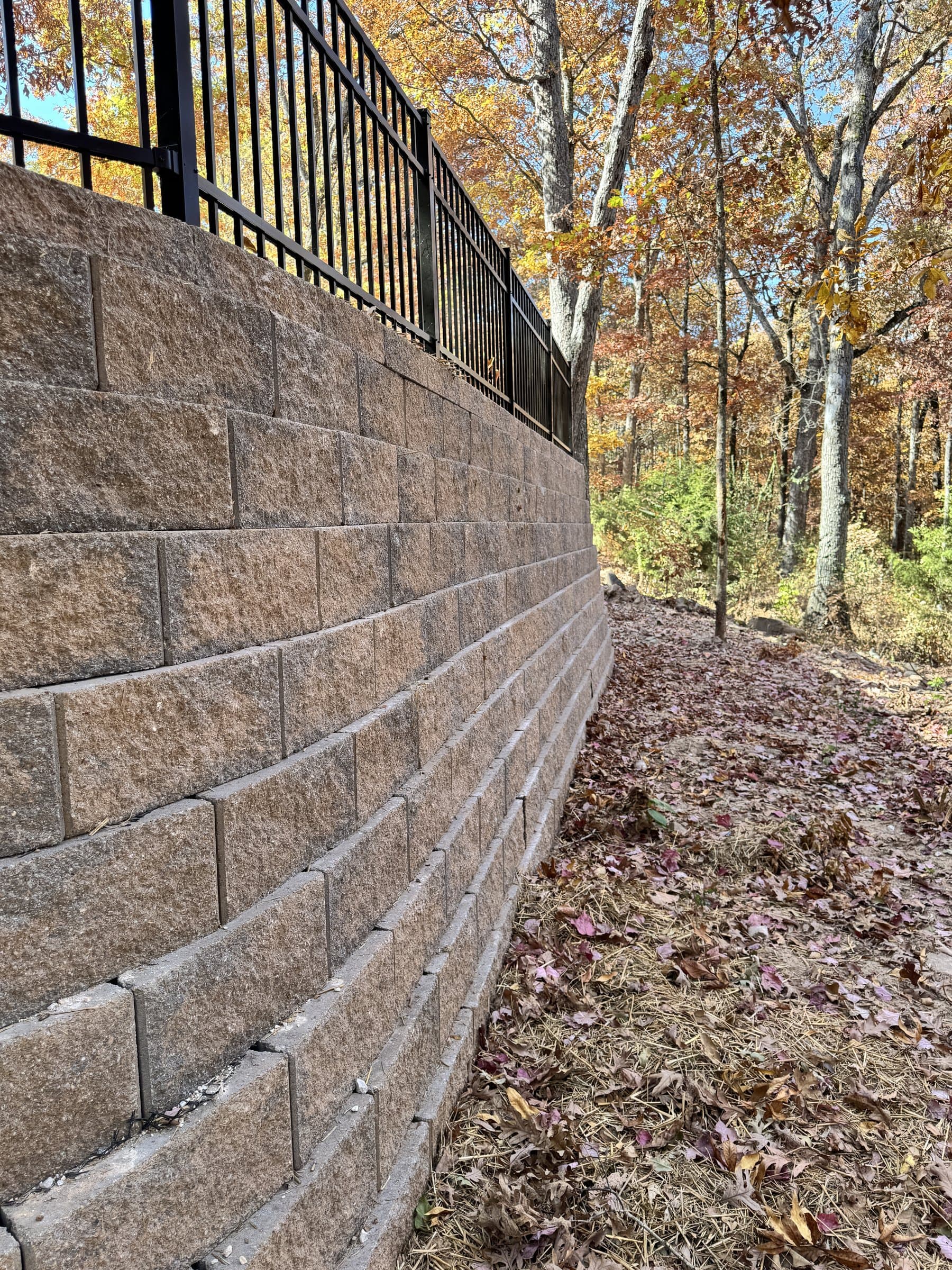
- Lean. Most block walls are built to lean slightly back into the slope. A wall leaning out toward you, or out of line with its own ends, is moving.
- Bulge. Sight along the face from one end. A belly in the middle, or blocks pushed out of line, means pressure behind the wall is winning.
- Water. Look for drain outlets at the base or ends, stains, a wet strip at the foot, or soil washing out of the joints. A wall with no visible way for water to get out is holding it.
- Height. Measure it. Taller walls carry more load and are more likely to have needed engineering or a permit. In Bentonville, for example, a retaining wall over four feet needs a permit.
- What is on top. A driveway, pool or house close behind the wall adds load. That is the wall the inspector should look at, and the one you most want built properly.
- Timber. Old railroad tie or landscape timber walls rot from the inside. Push a screwdriver into the lower courses.
Our guides on why retaining walls lean and why they fail show what each sign means, and when a wall needs an engineer covers the height question.
03How do we judge the patio?
Look at the slope, the joints and the edges, and look where it meets the house.
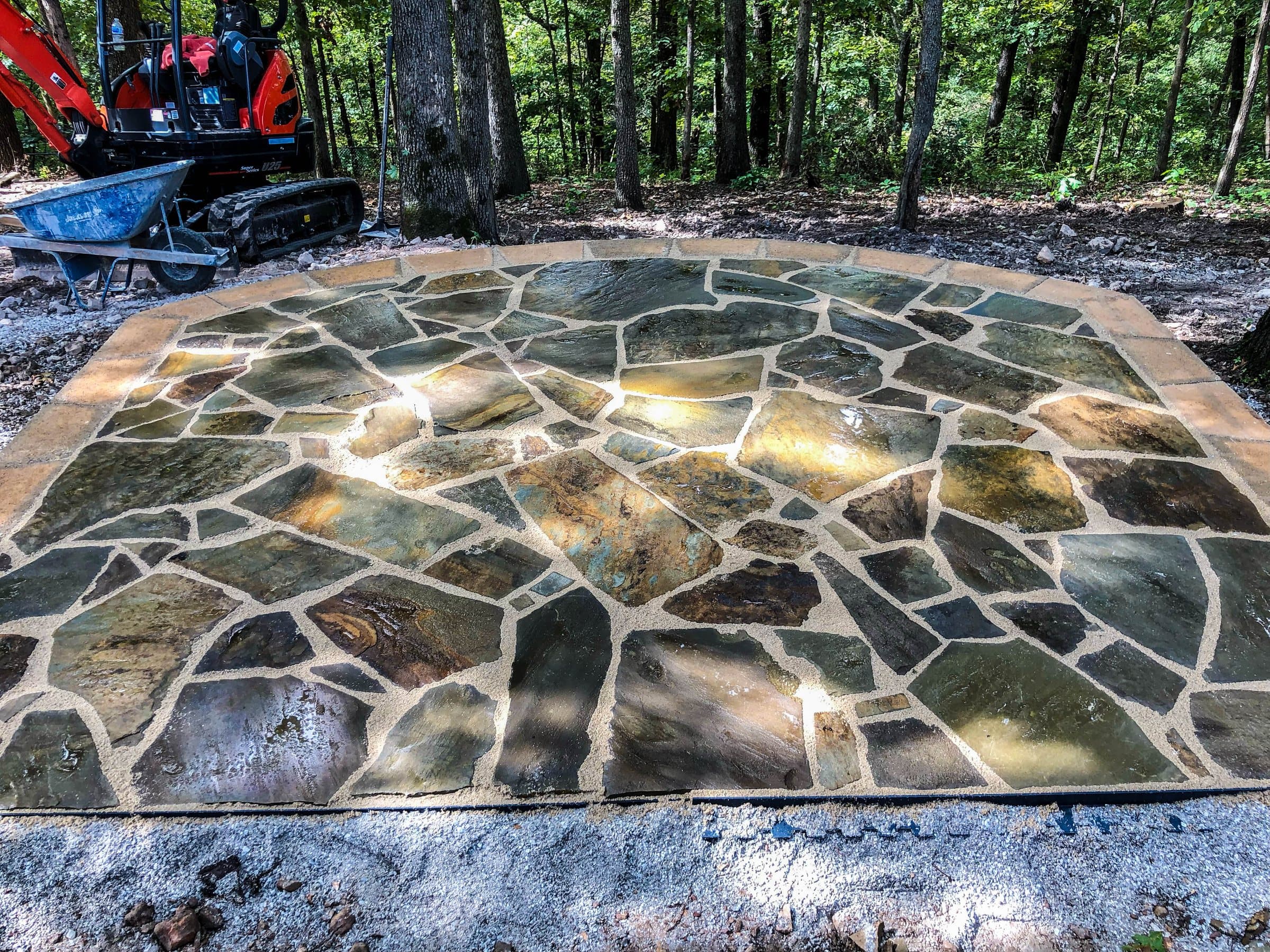
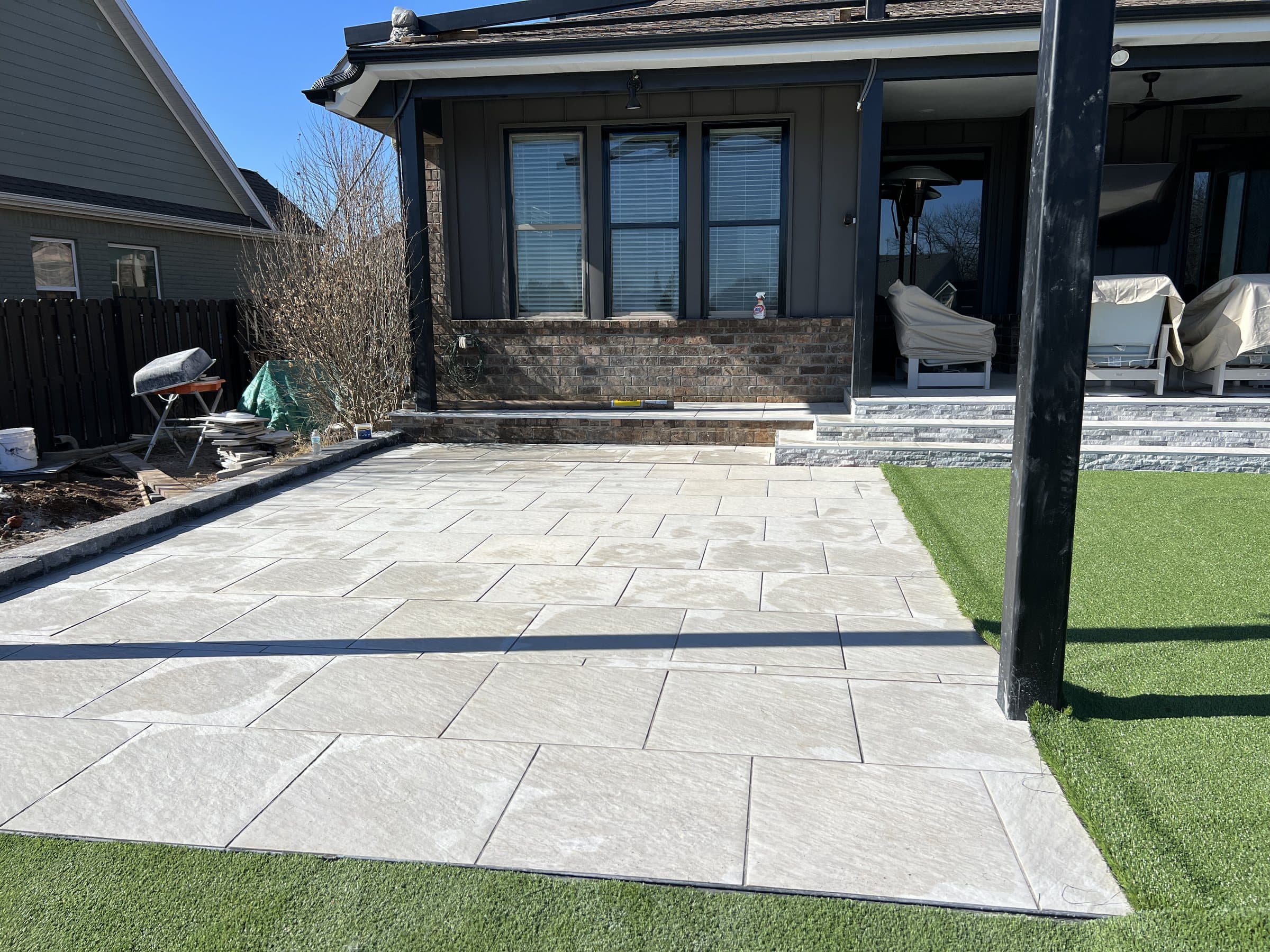
Section R401.3 of the Arkansas residential code says hard surfaces within 10 feet of the foundation must slope at least 2 percent away from the building. A patio that holds water near the back door, or visibly falls toward the house, fails that. On pavers, look for dips, rocking units, joints that have opened or lost their sand, and edges that are spreading into the lawn. On concrete, look for cracks where one side sits higher than the other and for a gap opening between the slab and the house.
A few settled pavers are a repair. A whole patio that has dipped in the middle, or one where the edge has rolled, usually means the base was thin or the water had nowhere to go, and that is a rebuild. Our guides to sinking patios, shifting pavers and water pooling help tell the two apart.
04How can we check the drainage if it is not raining?
Read the ground for the marks water leaves, and if you can, go back in a storm.
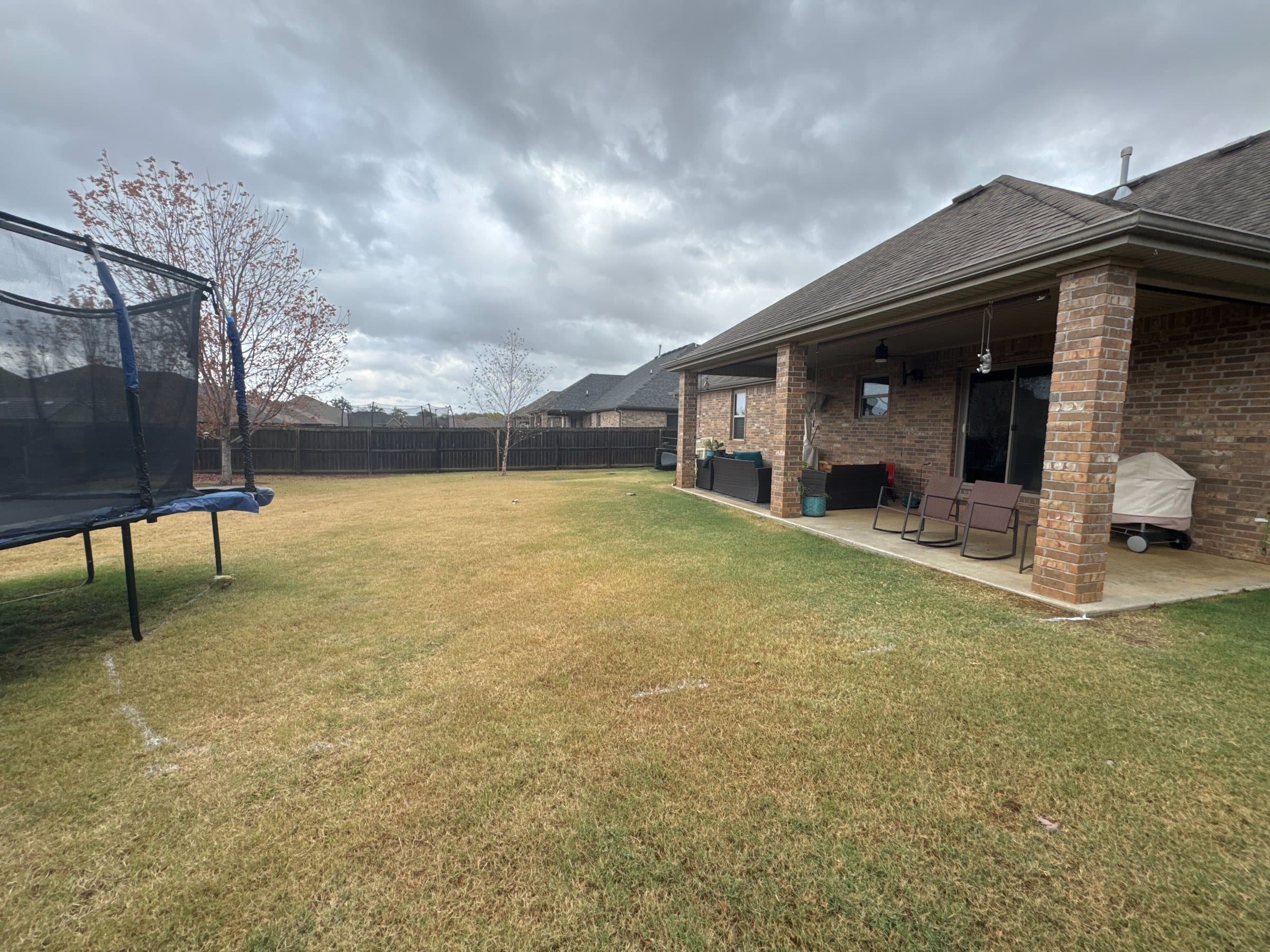
The code wants the ground to fall at least 6 inches within the first 10 feet from the foundation. With a tape and a string line, or just by eye, see whether the ground slopes away from the house on every side. Then look for the evidence:
- mulch or gravel washed into a fan at one spot;
- bare channels in the lawn, or silt on the patio;
- downspouts that empty against the wall, or extensions that have been removed;
- a green, soft strip in a dry spell, which often means water is collecting there;
- stains or efflorescence on the foundation or garage wall;
- new sod or fresh mulch in one suspiciously neat patch.
If you have the option of a second visit, go during or just after heavy rain. It is the single best drainage test there is, and it costs nothing. Our guide to drainage and grading explains the fixes and why they are rarely in anyone's quote.
05Is there anything specific to the ground in Northwest Arkansas?
Yes. Karst in Benton County, shale around Fayetteville, and a lot of fill on newer lots.
Most of Benton County sits on limestone and chert where small sinkholes and soft spots are part of the landscape. A hole or dip in the yard of a house you are buying deserves a question, not a shrug. Our guides to karst and sinkholes and to holes and soft spots under a patio explain what is normal. South of Springdale the ground changes to shale that swells and shrinks with moisture, which cracks slabs in a different way; see Fayetteville shale.
On newer lots, the ground around the house is often fill that is still settling. If the house is only a year or two old, read our guide on backfill settlement before you judge a patio that has started to tip.
06What about the pavilion, outdoor kitchen or pool?
Treat them as separate systems and ask for them to be checked separately.
The Arkansas standard does not require the inspector to look at outbuildings other than garages and carports, and a detached pavilion or pergola usually falls outside the house inspection. For a roofed structure, look at the posts where they meet the ground: rot, rust, or a post sitting on a slab with no sign of a footing. Look at the roof for sagging beams and at where it joins the house, if it does, for water stains.
An outdoor kitchen adds gas, power and sometimes water. Ask when it was installed, who did the gas and electrical work, and whether it was permitted. Turn everything on. A pool is its own inspection by its own specialist, and the deck around it is worth the same checks as a patio: slope away from the water and the house, no settled sections, no trip edges.
None of this is a reason to walk away from a house. It is a reason to know the number before you sign. Our covered patio and pavilion and retaining wall cost guides show what replacement typically involves.
07What should we ask the seller or the listing agent?
Who built the walls and patio, when, whether there was a permit, and whether anything has been repaired.
Put the questions about outdoor work in writing, because the answers are specific and you want them on record. Ask for the name of the company that built the retaining walls and patio, the year, any engineering drawings for tall walls, and any warranty. Ask whether any section has been rebuilt or reset. A wall that was rebuilt once has already told you something about the ground.
You can also ask the city. Permits for walls, pools and covered structures are public records in most places, and a missing permit for a structure that needed one is something to resolve before closing, not after. Our permit guides for Bentonville, Rogers and Cave Springs say what each city requires. In a subdivision, check that existing structures were approved by the HOA as well.
08Who should look at it if something seems wrong?
For a wall that is clearly moving or holds up the house, a structural or geotechnical engineer. For everything else, someone who builds this work.
An engineer can tell you whether a wall is safe and what a repair needs. A builder who does hardscape every week can tell you what the fix costs and whether the patio is worth keeping, which is the number you need for the negotiation. For a relocating buyer on a short timeline, getting that number before the option period ends is the whole point. Our checklist of questions to ask a hardscape contractor helps you judge whoever you call.
If you are relocating, the companion guides on what is different about building here and what to build first in a new build are worth a read before you close.
Projects with Gallardo Custom Builds start around seven and a half thousand dollars. Francisco "Paco" Gallardo, the owner, walks the ground himself before any number is given, because in Northwest Arkansas the number depends on what is under the turf. Financing is available through Acorn Finance. Call (479) 379-2226 or send the project form.
FAQCommon questions
What should I check on a retaining wall before buying a house?
Lean, bulge, drainage and height. Look for the face leaning out, a belly in the middle, missing drain outlets or wet soil at the base, and measure it, since taller walls are more likely to have needed engineering or a permit.
Does a home inspector check retaining walls in Arkansas?
Only those likely to adversely affect the building, under the state standards of practice. Walls elsewhere on the lot, erosion control and soil conditions are not required.
We are relocating to Rogers and cannot see the house in the rain. How do we check drainage?
Look for washed mulch, bare channels, silt on the patio, downspouts ending at the wall and stains on the foundation. Ask your agent or inspector to send photos or video after a storm if one comes during the option period.
Is a sinking paver patio a deal breaker?
Rarely. A few settled pavers are a repair. A whole patio that has dipped or spread usually needs a rebuild, which is a number to get before you negotiate.
Should I ask whether the retaining wall had a permit?
Yes. Permits are public records in most cities, and a tall wall without one is worth resolving before closing. In Bentonville a retaining wall over four feet needs a permit.
What is different about checking a yard in Northwest Arkansas?
Benton County sits on karst limestone and chert, so dips and holes deserve a question, and newer lots often have fill around the house that is still settling.
Who can tell me what a failing wall will cost to fix?
An engineer can tell you whether it is safe and what the repair needs. A hardscape builder can price the fix, which is the number you need for the negotiation.
REFSources
NEXTGet it looked at properly
Everything above is general guidance. What your ground actually needs is a site visit, and ours costs nothing. Francisco Gallardo walks it, reads the grade and the drainage, and tells you what is possible.